


 Français
 Español
 русский

Home / News / Industry News / Agricultural Rotary Tiller Guide: Types, Power Matching and Field Setup
Agricultural Rotary Tiller Guide: Types, Power Matching and Field Setup
Content
- 1 What an Agricultural Rotary Tiller Actually Does
- 2 Structural Families and Where Each One Fits
- 3 Matching Working Width to Tractor Power
- 4 Paddy Work: Puddling, Levelling and Straw Incorporation
- 5 What Separates a Durable Tiller From a Cheap One
- 6 A Pre-Order Checklist That Prevents Most Regrets
- 7 Frequently Asked Questions
A rotary tiller earns its place in a machinery line by what it leaves behind: clods small enough for a seed to close against, crop residue mixed through the top layer instead of matted on the surface, and a surface level enough that the drill does not have to fight it.
Most buying mistakes begin on the specification sheet rather than in the field. Working width gets compared before anyone checks what the tractor can pull in the heaviest soil on the farm. Blade counts get compared before anyone counts the straw coming off last season's crop. The result is a machine that is too wide for the available power, or too narrow to finish a headland in a sensible number of passes.
The sections below cover the working principle, the structural families worth knowing, how to size a unit to a tractor, and the checks that separate a tiller that runs for a decade from one that runs for three seasons.
What an Agricultural Rotary Tiller Actually Does
An agricultural rotary tiller is a PTO-driven secondary tillage implement that cuts, lifts, mixes and levels topsoil with curved blades mounted on a horizontal rotor, producing a seedbed in one or two passes after primary ploughing.
Working definition: the rotor blades strike the soil at speed and throw each slice against the rear hood, so the plough's slicing action is replaced by a chopping and mixing action that leaves a finer, more uniform tilth.
Three settings decide what that tilth looks like, and all three sit in the operator's hands rather than in the catalogue:
- Rotor speed, set by PTO rpm and gearbox ratio. Higher speed gives finer soil and more airborne dust, and burns more fuel per hectare.
- Ground speed. Slower travel means more blade strikes per metre of soil; faster travel does the opposite and leaves a coarser surface behind.
- Working depth, controlled by the rear roller, skids or depth wheels. Depth that creeps past the design range overloads the driveline and smears soil at the bottom of the cut.
Finer is not automatically better. Soil broken down too far slakes after the first heavy rain, seals the surface and loses infiltration, which is a real cost on sloping ground. A good pass leaves a mix of pea-sized aggregates and fines, with residue distributed through the working depth instead of buried in one band.
Structural Families and Where Each One Fits
Rotary tillers are built in a small number of structural families, and the family usually matters more to the buyer than the colour of the gearbox.
| Configuration | Structural note | Best field fit |
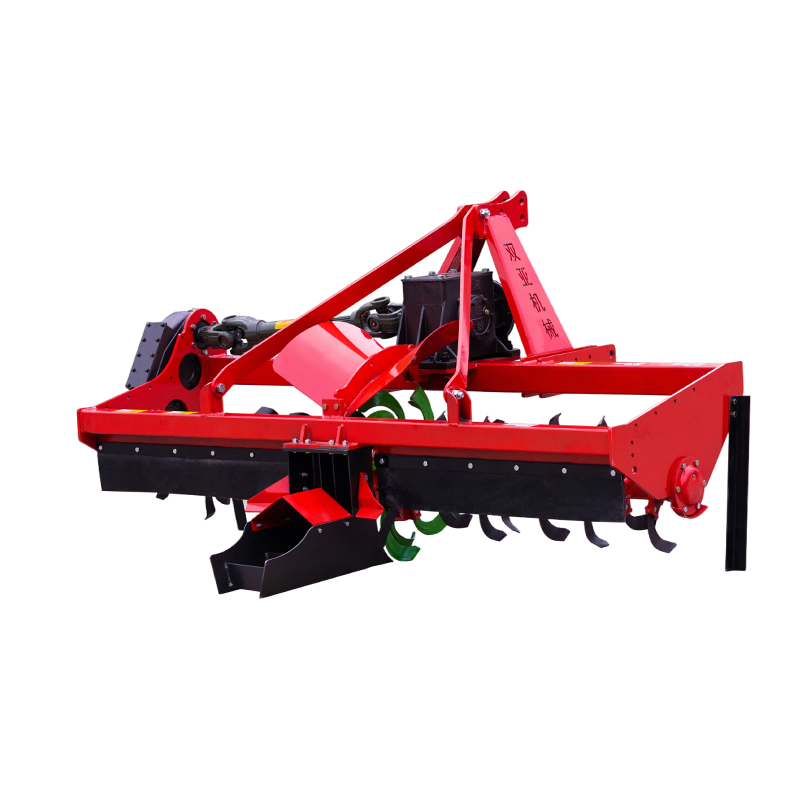
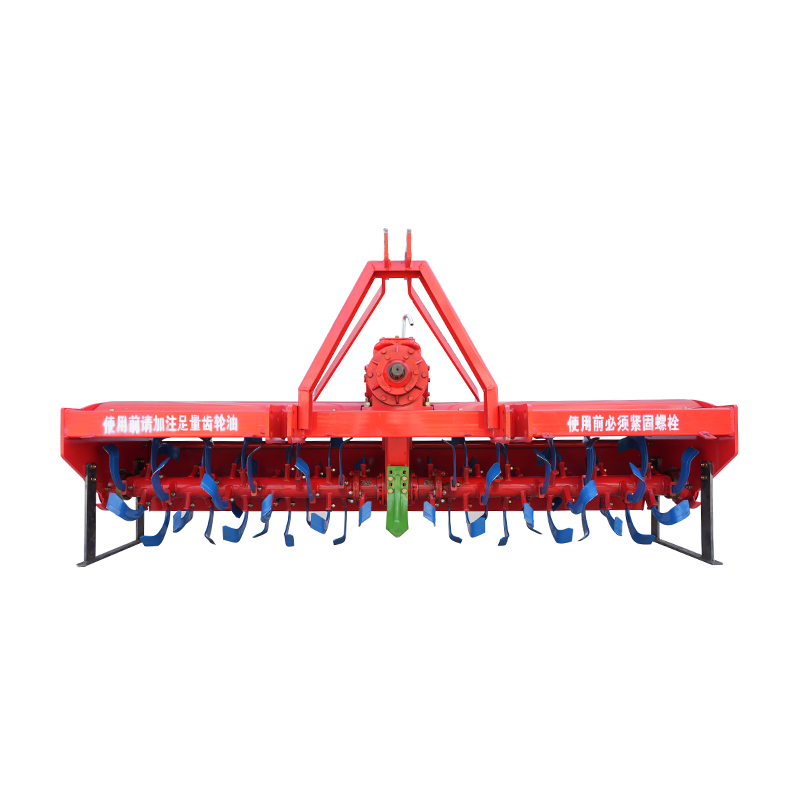
| Fullshaft rotary tiller (1GK) | Rotor runs as one continuous shaft across the full working width | Level, open fields where depth consistency across the width matters most |
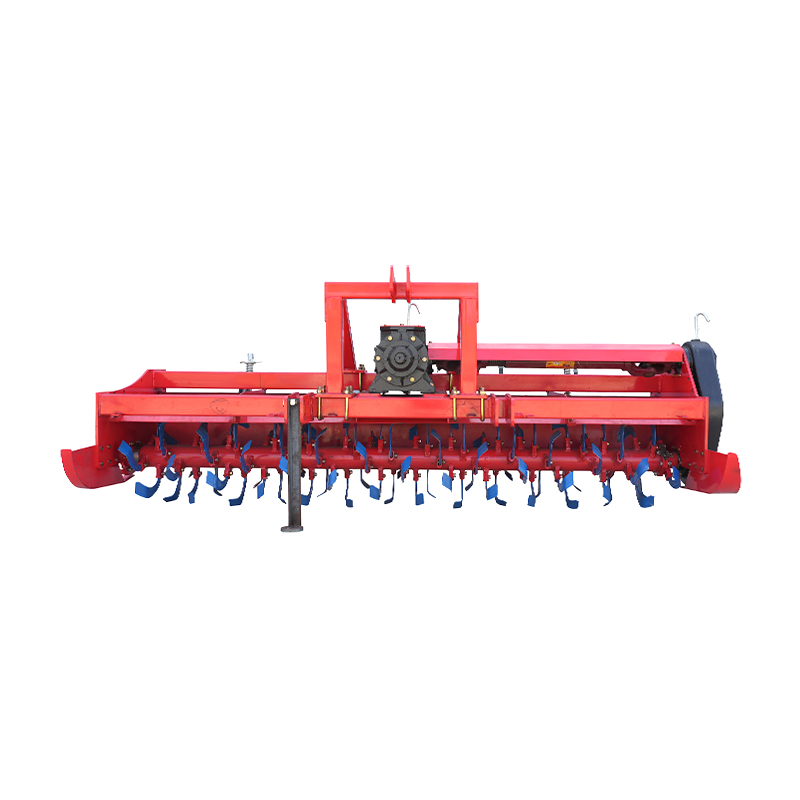
| Semishaft rotary tiller (1GKN) | Rotor built in sections with intermediate support | Wide units where frame rigidity and blade access during service count |
| Folding paddy puddler and leveler | Two or three folding sections, leveling board behind the rotor | Waterlogged paddy where straw incorporation, puddling and levelling run in one pass |
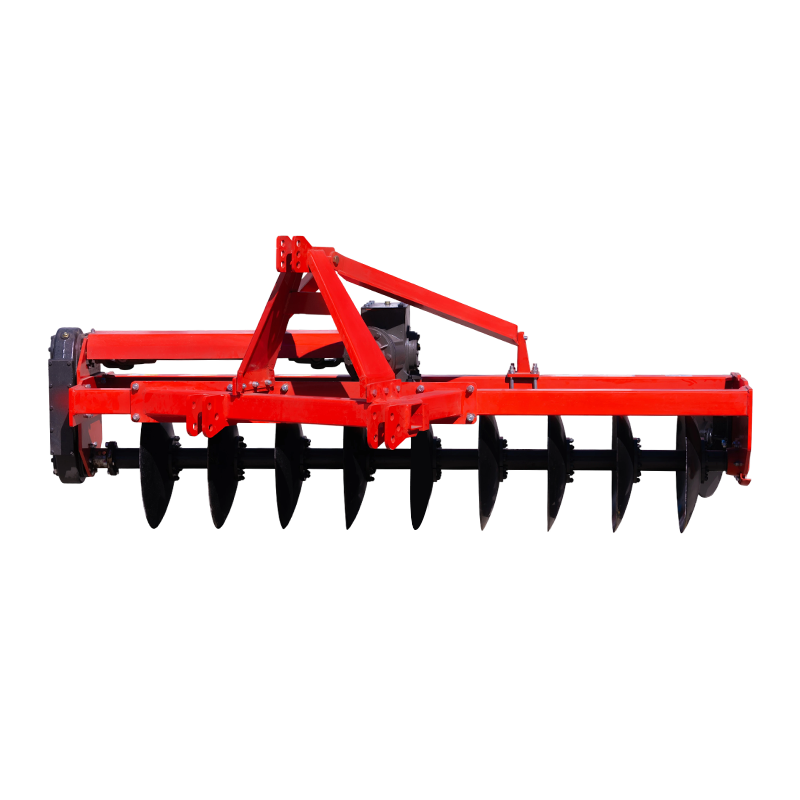
| Disc plow and rotary combination | Plowing and rotary cultivation carried on one frame | Fields that need primary inversion and seedbed work in a single trip |
| Rotary ditcher | Side-mounted rotor with single or dual discharge | Field drainage, furrow opening and ditch maintenance |
Most manufacturers publish two tiller families along exactly this split, for example the 1GK and 1GKN rotary tiller range, then add folding paddy machines and combination units above them. The practical argument for multi-section paddy equipment is transport width: a three-section unit folds down for the road and still works full width in the field, which matters where gates are narrow and the distance between plots is long.
Combination machines trade simplicity for fewer passes. A disc plow and rotary tiller on one frame does the primary and secondary job in one trip, but it concentrates load on one hitch and one lift, so lift capacity and stone content both need checking before the order goes in.
 Disc Plow and Rotary Tiller CombinationCombination unit performs disc plowing and rotary tillage in one pass; listed widths of 164–332 cm and 80–180+ hp help match tractor and field.View Product →
Field note
Folding sections are not cosmetic. On a wide unit, hinges and locking pins carry the working load and take the vibration, so they belong on every service checklist. A hinge with a worn bush changes working depth across that section before it ever looks broken.
Matching Working Width to Tractor Power
Working width should be set from the tractor's PTO power in the heaviest soil on the farm, then accepted or reduced, never from the widest model standing in stock.
Ask for one number before anything else: the recommended PTO horsepower per metre of working width. In light, dry soil that figure is a ceiling. In heavy clay, or behind a crop that left a thick straw mat, take a narrower width rather than betting on a lower gear.
Two more numbers belong in the same conversation. Blade count per flange and rotor speed together decide how many strikes the soil takes per metre of travel, and the driveline has to be matched to the torque that follows. A 540 rpm PTO feeding a rotor geared too high polishes the surface instead of working through it; geared too low, it slips the clutch in wet conditions and stalls the job.
Blade shape changes behaviour more than catalogues suggest. Curved blades lift, mix residue and leave a slightly looser surface; straight blades work harder ground with less vibration but throw less material against the hood. On stony ground the driveline protection outranks both, because a slip clutch or shear bolt that fails safe costs far less than a gearbox rebuild. A fuller walkthrough of width, power and blade selection sets out the arithmetic behind the sizing decision.
Paddy Work: Puddling, Levelling and Straw Incorporation
In flooded paddy, a rotary tiller is used to puddle saturated soil, incorporate standing straw and level the surface, so seedlings sit in an even water layer instead of in a field of high and low patches.
Dry field tillage
- Goal is a firm, airy seedbed with aggregates that resist slaking
- Depth usually 12 to 18 cm, set by roller or skids
- Residue mixed through the layer, not buried in a band
- Pass judged by clod size and levelness under the drill
Paddy puddling and levelling
- Goal is a saturated, sealed layer plus a flat surface
- Leveling board behind the rotor carries soil into low spots
- Straw worked in wet to speed breakdown before transplanting
- Pass judged by water depth consistency across the plot
Levelling accuracy is where paddy machines earn or lose their cost. Water always runs to the low corner, so a plot with a few centimetres of variation drinks more water than a flat one every single irrigation cycle.
A level field is a water-saving device. Every centimetre of height difference between the high spot and the low spot is paid for again and again, as extra pumping time or as extra depth over the whole plot.
Multi-section folding paddy machines exist because that levelling job wants width, while roads and gates want narrowness. A three-section folding unit with a leveling board handles straw incorporation, puddling and levelling in a single pass, which shortens the window between harvest and transplanting.
 Three-Section Hydraulic Folding Paddy Puddler and LevelerWide paddy implement folds hydraulically for road transport; PTO-driven rotors puddle soil, incorporate straw, and a leveling mechanism smooths fields before planting.View Product →
What Separates a Durable Tiller From a Cheap One
Two tillers with identical width and blade count can differ by a factor of two in service life, and the difference sits in the parts a catalogue rarely lists.
20,000 square metres of manufacturing space behind one established exporter
6 production lines covering cutting, welding, machining, coating and assembly
30+ countries reached by a mature export programme
Those numbers come from published manufacturer profiles, and they are useful mainly as prompts. If welding, machining and coating all happen under one roof, the buyer can ask for a weld record and a coating specification instead of taking both on trust.
- Gearbox casting quality and oil seal design, which decide whether the first leak appears in year two or year six.
- Rotor tube wall thickness and blade bolt grade, the two places where weight savings turn into cracking.
- Side plate and frame thickness, which controls how the machine behaves on hard, dry ground.
- Blade steel and heat treatment, since blades are the consumable that sets annual running cost.
- Surface preparation before paint, because coating failures start at the weld seam, not on the flat panel.
The cheapest due diligence is the spare parts question. Ask which wearing parts ship as a standard kit, and ask the lead time for a gearbox seal and a blade set. A machine that waits three months for a common seal sits in the shed while the season walks past.
A Pre-Order Checklist That Prevents Most Regrets
Five checks, worked through in this order, remove most of the risk from a rotary tiller order.
- Confirm the tractor, not the brochure. Record PTO horsepower, hitch category, lift capacity at the linkage and available hydraulic flow. A tiller sized from engine horsepower alone is usually oversized.
- Walk the fields before choosing a width. Note soil texture, stone content, slope, gate width and the straw load from the previous crop. Headland size decides how much time is lost turning on every pass.
- Fix the specification in writing. Working width, blade count, rotor speed, depth range, hitch type and folding configuration should all appear in the confirmation, not just in conversation.
- Check driveline protection and guarding. Slip clutch or shear bolt, a PTO shaft rated for the torque, and full shielding on every rotating part. This is also the item that most affects safety on the farm.
- Agree spares, documentation and support. Wearing parts list, seal and bearing availability, a parts diagram in a usable language, and a named contact for technical questions.
One written page covering width, power requirement, blade specification, protection type and spare parts list is worth more than a dozen verbal assurances, because it is the only version of the agreement that survives a change of staff on either side.
None of these steps takes long. Together they cost an afternoon, and they replace the most expensive kind of learning, which is the kind discovered halfway through a season with the drill waiting.
Frequently Asked Questions
Most rotary tiller questions come back to three variables: available power, soil moisture and blade condition. Everything else is a detail of how those three are managed.
What is the difference between a fullshaft and a semishaft rotary tiller?
A fullshaft unit carries its blades on one continuous rotor across the working width, while a semishaft unit builds the rotor in sections with intermediate support. The sectional layout is generally chosen on wider machines, where frame rigidity and access to blades during service matter more than a simpler shaft.
How much PTO power does an agricultural rotary tiller need?
Manufacturers publish a recommended PTO horsepower per metre of working width. Treat that figure as a ceiling in light, dry soil, and reduce the working width in heavy clay or where the previous crop left a thick straw mat.
Can one tiller handle both dry fields and flooded paddy?
Not ideally. Paddy work needs a leveling board, generous soil flow through the hood and often folding sections for transport, while dry field tillage is better served by a lighter and simpler rotor layout. Machines built for puddling and straw incorporation move saturated soil without blocking in ways a dry field unit usually cannot.
How many passes does a rotary tiller need to make a seedbed?
One pass after ploughing is normal on light soil, and two crossed passes are common on heavier ground where clods need breaking down. More than two passes usually points to a width, depth or blade condition problem rather than a genuine need for extra trips.

We Are Ready to Support Your Agricultural Machinery Needs
Share your requirements and we will contact you shortly with a tailored solution and professional quotation.
Copyright © Jiangsu SUNYA Machinery Ltd. All rights reserved.
 Agricultural Tillage Equipment Manufacturers in China