


 Français
 Español
 русский

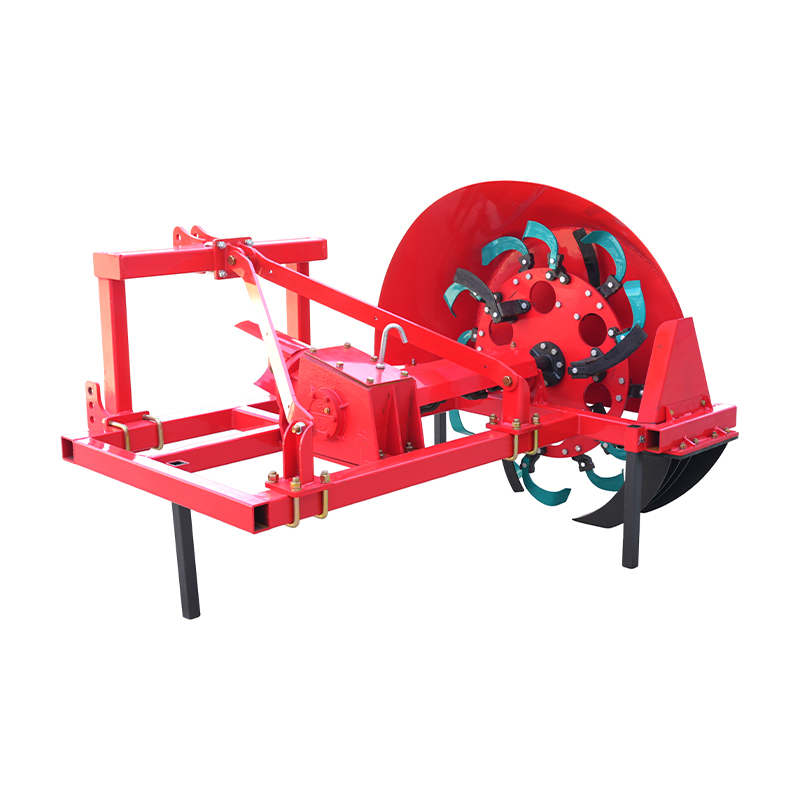
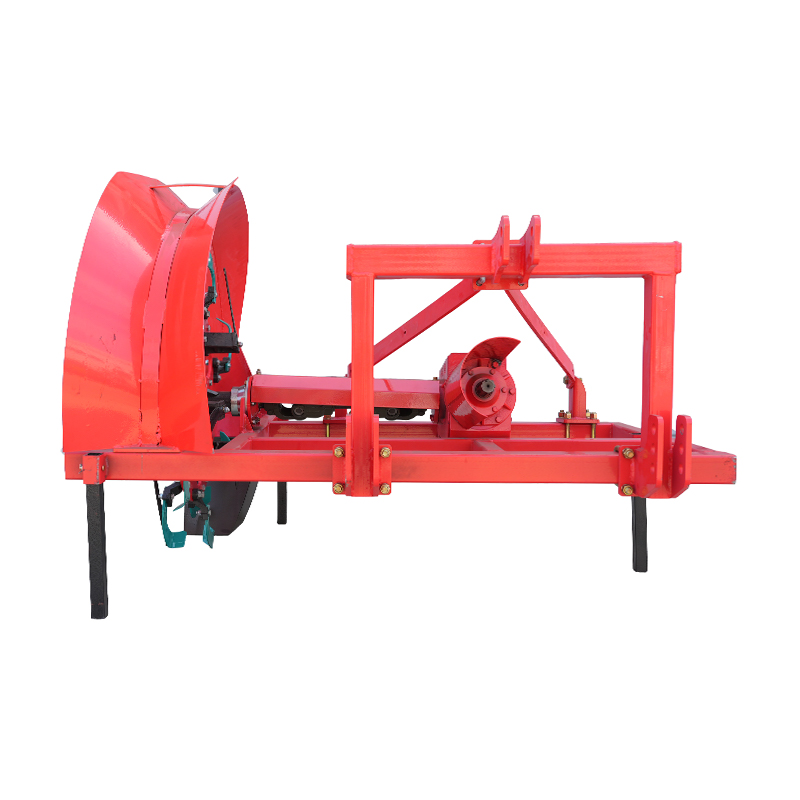
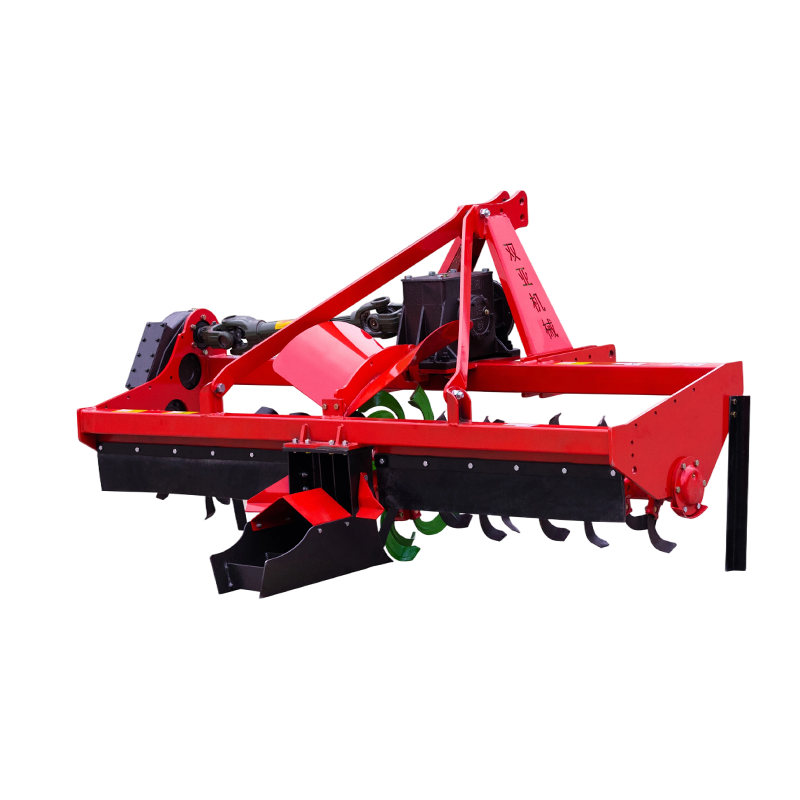


Jiangsu SUNYA Machinery Ltd. designs and builds tractor-mounted, PTO-driven implements for ditch and furrow formation. As a Rotary Ditcher manufacturer, we supply offset single-side discharge, offset dual-side discharge and combined rotary tillage and ditching machines, all carried on a three-point hitch and driven from the tractor power take-off. The rotating cutter head cuts, breaks and lifts soil as the tractor moves forward, discharging it to one side or both sides to leave a defined channel in a single pass.
Production runs from a 20,000 m² facility in Jiangsu with six energy-efficient lines and annual output above 2,000 machines. Since 2010 we have supplied tillage, paddy preparation and seeding machinery to more than 30 countries, and several ditching configurations now in series production began as customer-specific projects built from drawings or field samples.
Our Rotary Ditcher Range
Three configurations cover most ditch, trench and furrow requirements in field crop production, orchard management and protected cultivation. Each shares the same working principle — PTO-driven rotary cutting with controlled soil discharge — and differs in discharge direction, offset position and whether tillage is combined with ditching.
Offset Single-Side Discharge Rotary Ditcher
Our Offset Single-Side Discharge Rotary Ditcher uses an offset working unit with curved cutting blades and throws excavated soil to one side of the ditch. The offset layout lets the machine run close to field bunds, orchard rows and greenhouse sidewalls where spoil on both sides would obstruct the tractor path.
- Ditching depth 30 cm; trench bottom width 20 cm; top opening width 30 cm
- Lateral shift position 0–20 cm
- Tractor requirement 70–120 HP (52–89 kW), three-point hitch
- Machine weight approximately 480 kg; overall dimensions 163 × 171 × 138 cm
Offset Dual-Side Discharge Rotary Ditcher
The Offset Dual-Side Discharge Rotary Ditcher distributes excavated soil to both sides of the channel. Splitting the spoil reduces one-sided accumulation and helps hold a uniform profile, which suits farmland irrigation and drainage lines, orchard inter-row work and small-scale ditch construction.
- Ditching depth 30 cm; trench bottom width 20 cm; top opening width 30 cm
- Side shift position 0–20 cm
- Tractor requirement 70–120 HP (52–89 kW), three-point hitch
- Machine weight approximately 480 kg; overall dimensions 163 × 171 × 128 cm
Rotary Tiller & Ditcher Combination
The Rotary Tiller & Ditcher Combination performs rotary tillage, soil pulverisation and ditching in one field pass, reducing implement changes and traffic over the seedbed. A soil distribution plate spreads the excavated material evenly, and the trenching components are shaped with smooth edges for clean channel walls.
| Model | Working width (cm) | Overall dimensions (cm) | Trenching depth (cm) | Matching power (HP) | Blade set |
|---|---|---|---|---|---|
| 12KG-200 | 200 | 162 × 240 × 122 | 10–20 | 70–90 | 48+12+4 |
| 12KG-230 | 230 | 162 × 270 × 122 | 10–20 | 80–100 | 56+12+4 |
| 12KG-250 | 250 | 162 × 290 × 122 | 10–20 | 90–120 | 60+12+4 |
| 12KG-280 | 280 | 166 × 320 × 122 | 10–20 | 110–140 | 68+12+4 |
| 12KG-300 | 300 | 166 × 340 × 122 | 10–20 | Above 140 | 72+12+4 |
Ditch Formation: Working Principle and Field Behaviour
The cutter head is the working heart of the machine. Curved blades mounted on a powered shaft cut into the soil, break it into manageable fragments and discharge it clear of the channel, so depth and bottom width are set by blade geometry and machine position rather than by a pulling action through the ground.
Depth consistency across a run depends on stable three-point hitch control, a steady forward speed and consistent soil moisture. In heavy wet clay the blades lift a cohesive ribbon that needs enough discharge velocity to clear the ditch; in sandy loam the same setting cuts a clean profile with less power demand. Heavily stony or weed-infested ground loads the shaft and the frame, and we build reinforced versions for those conditions.
Application Fit Across Crops and Field Layouts
Rotary ditching work separates into two families: narrow channels cut beside a boundary or crop row, and full-width seedbed passes where a furrow is formed at the same time as tillage. The table below maps our configurations to the field situations they serve.
| Configuration | Ditch profile | Tractor power | Typical fit |
|---|---|---|---|
| Offset single-side discharge | 30 cm deep, 20 cm bottom, 30 cm top | 70–120 HP | Irrigation ditches along field bunds, orchard fertilizer furrows, greenhouse drainage, planting furrows |
| Offset dual-side discharge | 30 cm deep, 20 cm bottom, 30 cm top | 70–120 HP | Farmland drainage and irrigation lines, small ditch construction, orchard rows |
| Tiller & ditcher combination | Trenching depth 10–20 cm within 200–300 cm working width | 70–140+ HP | Seedbed preparation and furrow formation in one pass, larger field crop blocks |
Critical Specifications and Configuration Choices
- Ditch geometry: working depth, bottom width and top opening width determine blade and cutter-head selection.
- Offset position: the lateral shift range sets how close the machine works to bunds, tree rows or greenhouse walls.
- Discharge direction: one side where the tractor must keep a clean path, both sides where a symmetrical profile and even spoil spread matter more.
- Tractor interface: three-point hitch mounting with PTO drive; matching is confirmed against tractor power in HP and kW.
- Drive train: blade shaft, blade angle and gearbox ratio are adjustable on custom builds to suit local soil and working speed.
- Wearing components: replaceable curved blades and reinforced frame sections for high-frequency use.
- Ground engagement: reinforced structures and thickened transmission parts for clay, sandy loam and heavy wet soils.
Custom builds are a core part of how we work. Working width, depth, blade shaft, blade angle and gearbox ratio can be modified, and reinforced versions are available for harsh field conditions. Many of our best-selling overseas models came from exactly this kind of adaptation to local tractor power and farming practice.
Tractor Matching, Installation and Commissioning
We match the implement to the tractor before the order is released, using the PTO power figure rather than the engine rating alone, and we confirm hitch mounting and machine weight against the lift capacity available at the three-point linkage.
- Mount to the three-point hitch and level the frame laterally on flat ground.
- Connect the PTO shaft, check guard coverage and confirm the shaft length at full lift.
- Set the initial working depth from the ditch profile, then run a short trial pass in field conditions.
- Check spoil discharge pattern and ditch bottom width, then adjust offset position and depth setting.
- Record the working speed and depth combination that produces the required profile for the rest of the job.
Manufacturing Quality and Acceptance
Every production stage in our factory is inspected by trained personnel, covering cutting, welding, machining, coating and final assembly. Key components are reinforced for wear resistance, and all finished machines receive 100% final inspection against customer specifications and international standards.
- ERP-based production management for traceable order progress and stable lead times
- Full-process inspection from raw material preparation to painting
- Final functional testing of the cutter head, drive train and hitch assembly before packing
- Standardised export packaging and container loading, with FCL or LCL arrangements
Information We Use to Configure Your Solution
Our proposal is built around the working point, the soil and the tractor, not a catalogue number alone. The following inputs let us select a model and confirm the parameters on the order.
- Tractor make, model and PTO power in HP or kW, plus hitch category
- Required ditch depth, bottom width and top opening width
- Preferred discharge side and required offset from the tractor centre line
- Soil type, moisture range, stone content and typical weed load
- Field area per season, working speed expectation and number of passes
- Crop layout: bunds, orchard rows, greenhouse bays or open field blocks
- Order quantity, destination port and preferred shipping mode
Maintenance, Spare Parts and Serviceability
Cutting blades are the main wearing item, and blade condition directly affects ditch profile and power demand. We manufacture blades, harrow tines and bearings in-house, so replacement parts can be supplied with the machine order or as follow-up shipments.
Routine attention covers blade bolt torque, blade wear, gearbox lubrication, PTO shaft guards and frame fasteners. Operation guidance and follow-up support are part of our service system, and we answer enquiries within 12 hours on working days.
Rotary Ditcher — Frequently Asked Questions
What tractor power does a SUNYA rotary ditcher need?
The offset single-side and dual-side discharge models run on 70–120 HP (52–89 kW). Rotary tiller and ditcher combinations cover 70–140 HP across the 12KG-200 to 12KG-280 models, with 12KG-300 intended for tractors above 140 HP.
Can the machine work close to field bunds and orchard rows?
Yes. Both offset ditchers have a lateral shift range of 0–20 cm, which positions the cutter head beside the obstruction while the tractor stays on firm ground.
How do I choose between single-side and dual-side discharge?
Single-side discharge suits boundaries, orchard rows and greenhouse edges where spoil must stay on one side. Dual-side discharge spreads spoil evenly across both sides, which holds a cleaner symmetrical profile in farmland drainage and irrigation lines.
Can ditch depth, width and discharge be customised?
We develop machines from drawings, samples or described field conditions, adjusting working width, depth, blade shaft, blade angle, gearbox ratio and structural parameters. Reinforced versions are available for stony or heavy clay ground.
Do you supply spare blades and wearing parts?
We produce blades, harrow tines and bearings in addition to complete machines, so wearing parts can be included in the original order or supplied later against the machine model.
How are machines packed and shipped?
Machines are packed for export and loaded into containers at our site, 50 km from Lianyungang Port. Sea freight is the standard mode, with air freight arranged for urgent shipments, and FCL or LCL loading can be quoted.