


 Français
 Español
 русский


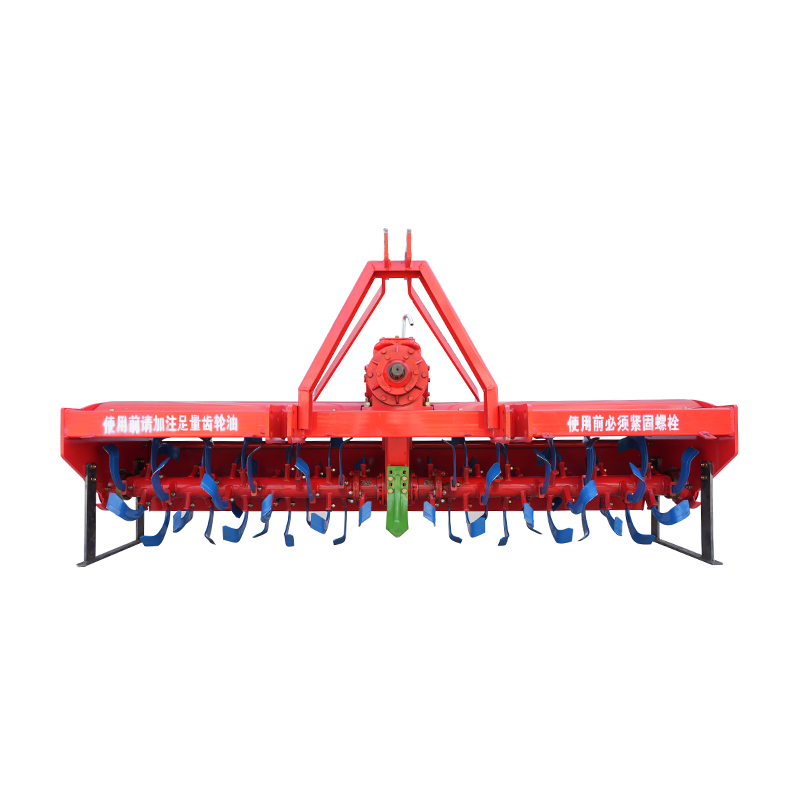
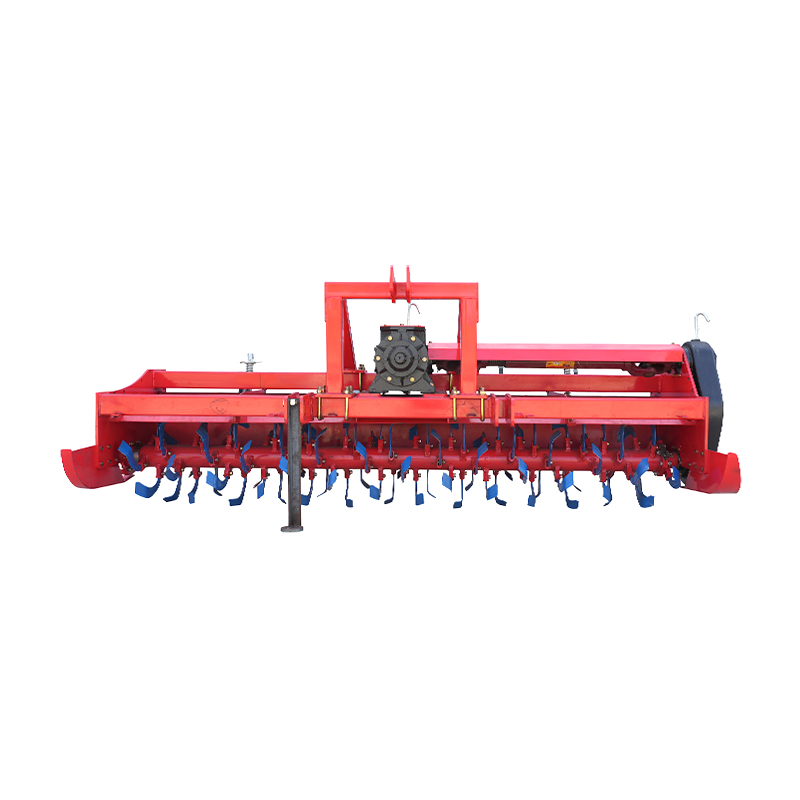


Tractor Rotary Tillers Built by SUNYA Machinery
Jiangsu SUNYA Machinery Ltd. is a Rotary Tiller manufacturer based in Jiangsu, China, producing tractor-mounted tillage implements for paddy and dryland land preparation. Since 2010 we have operated a 20,000 m² facility with six energy-efficient production lines and an annual output of more than 2,000 complete machines, supplying OEM and custom rotary tillers to farms, distributors and equipment programmes in over 30 countries.
Our rotary tiller range is built on two rotor architectures — center-drive with a split rotor shaft and full-width with a one-piece continuous shaft — covering working widths of 200–300 cm, working depths of 8–18 cm and tractor matching from approximately 70 to 150+ HP. We configure these machines for seedbed preparation, soil loosening, residue and green manure incorporation, and shallow cultivation of saline-alkali soils.
Our Rotary Tiller Range
Center-Drive Rotary Tiller (1GKN)
A three-point hitch, PTO-driven implement with a central gearbox and a split rotor shaft. The half-shaft structure increases rotor rigidity so the shaft resists deformation under continuous load, and the plough-body centre section improves tillage quality in the middle band of the pass. A frame-type gantry carries the high-horsepower configurations.
- Working width 200–300 cm; working depth 8–18 cm
- Matching power 70–150+ HP
- Blade counts from 58 to 88 depending on width
- Suited to uncultivated and previously plowed ground, wet or dry
Full-Width Rotary Tiller (1GK)
A three-point hitch, PTO-driven implement with a one-piece continuous rotor shaft, offered in flat-beam or raised-beam structure. The raised-beam version uses a curved hood to limit soil accumulation and clogging, which reduces power draw in heavy or wet conditions, and an integrated anti-wear plate controls weed build-up along the body.
- Working width 200–300 cm; working depth 8–18 cm
- Matching power 70–150+ HP
- Blade counts from 64 to 92 depending on width
- Suited to dry and wet tillage, shallow saline-alkali work, stubble and weed control
Range and Application Matching
| Configuration | Rotor and frame design | Width | Tractor power | Primary application |
|---|---|---|---|---|
| Center-Drive (1GKN) | Central gearbox, split rotor shaft, half-shaft rotor support, plough-body centre section, frame-type gantry | 200–300 cm | 70–150+ HP | Primary and secondary tillage in vegetable fields, orchards and large open fields; wet and dry preparation |
| Full-Width (1GK) | One-piece continuous rotor shaft, flat-beam or raised-beam frame, curved hood, integrated anti-wear plate | 200–300 cm | 70–150+ HP | Dry and wet field tillage, saline-alkali shallow cultivation, stubble and weed control, green manure incorporation, vegetable seedbeds |
Model Parameters
| Model | Series | Working width (cm) | Overall dimensions (cm) | Working depth (cm) | Matching power (HP) | Blades |
|---|---|---|---|---|---|---|
| 1GKN-200 | Center-Drive | 200 | 93×226×110 | 8–18 | 70–90 | 58 |
| 1GKN-230 | Center-Drive | 230 | 97×250×106 | 8–18 | 90–100 | 64 |
| 1GKN-250 | Center-Drive | 250 | 97×270×106 | 8–18 | 120–130 | 66 |
| 1GKN-280 | Center-Drive | 280 | 97×290×106 | 8–18 | 140–150 | 84 |
| 1GKN-300 | Center-Drive | 300 | 97×320×106 | 8–18 | Above 150 | 88 |
| 1GK-200 | Full-Width | 200 | 105×240×110 | 8–18 | 70–90 | 64 |
| 1GK-230 | Full-Width | 230 | 105×270×110 | 8–18 | 90–100 | 73 |
| 1GK-250 | Full-Width | 250 | 105×290×110 | 8–18 | 120–130 | 79 |
| 1GK-280 | Full-Width | 280 | 105×320×110 | 8–18 | 140–150 | 84 |
| 1GK-300 | Full-Width | 300 | 105×340×110 | 8–18 | Above 150 | 92 |
Where Each Rotary Tiller Configuration Fits
Rotor architecture follows the field, not the catalogue. Center-drive machines handle primary and secondary tillage where a rigid rotor and a well-worked centre band matter, while full-width machines suit broad passes where a continuous shaft and reduced clogging keep the tiller working in damp or residue-heavy conditions.
- Paddy and wet preparation: full-width raised-beam builds with the curved hood, keeping soil moving and power draw controlled in moist ground that supports puddling and levelling operations.
- Dryland seedbeds for wheat, corn and rice: either series at 8–18 cm depth leaves a fine, evenly levelled surface over a firmer lower layer.
- Vegetable fields and orchards: narrower 200–230 cm widths matched to lower-horsepower tractors for row work and inter-row preparation.
- Saline-alkali and stubble ground: shallow full-width cultivation with the anti-wear plate fitted to control weed build-up.
- Green manure and residue incorporation: blade count, blade angle and rotor speed set so crop residue, manure and weeds are mixed through the tilled layer in one pass.
- Combined passes: furrowing or ridging attachments added to the rotary tiller frame where the field layout calls for tillage and bed formation together.
Critical Specifications and Configuration Choices
Every order is fixed on a small set of variables that decide how the tiller behaves in the field. We confirm these at quotation stage and record them on the build sheet so the machine delivered matches the tractor and the soil it will work.
- Working width and depth: 200–300 cm widths with depth set across the 8–18 cm range.
- Rotor design: split rotor shaft with central gearbox, or one-piece continuous full-width shaft.
- Blade configuration: blade count, blade shaft and blade angle adjusted to residue load and pulverising requirement.
- Gearbox ratio: selected against PTO speed and the tractor's available power at the shaft.
- Frame structure: flat-beam or raised-beam, with frame-type gantry on high-horsepower centre-drive units and reinforced versions for harsh field conditions.
- Hood and wear protection: curved hood on raised-beam full-width models, integrated anti-wear plate along the body.
- Tractor adaptation: hitch and power matching localised to the tractor models and farming practice in the destination market.
Manufacturing and Quality Control
Cutting, welding, machining, coating and final assembly are completed in our own 20,000 m² plant across six energy-efficient production lines, with ERP-based production management tracking each order through the shop. Trained inspectors check every manufacturing step, and all finished rotary tillers undergo 100% final inspection against customer specifications and international standards before export packing.
Key components are reinforced for long-term wear resistance, with thickened transmission parts and strengthened frames for heavy-duty, high-frequency operation. Our engineering base includes a provincial postgraduate R&D station, National High-Tech Enterprise recognition, joint agricultural technology development with universities and a portfolio of more than 50 patents covering tillage and paddy machinery designs.
Installation, Commissioning and Maintenance
Rotary tillers mount on the tractor three-point linkage and take drive from the PTO, so commissioning starts with hitch and driveline alignment: PTO shaft length checked at the working depth range, guarding in place, and rotor clearance and blade condition verified before the first pass. Gearbox oil level, blade bolt torque and side plate clearance are confirmed during the initial run-in.
- Blade and blade-holder wear inspection at intervals set by soil abrasiveness and stone content
- Gearbox oil checks and periodic replacement, with side-drive components accessible without removing the frame
- Wear parts supplied as standard components — blades, harrow tines and bearings — alongside complete machines
- Export packaging and container loading planned with the machine to protect painted surfaces and driveline parts in transit
Related Equipment in Our Tillage Range
Rotary tillers work as part of a land preparation sequence, and we build the implements that complete it: the Paddy Puddler & Leveler for wet-field slurry consistency and levelling, the Disc Plow & Rotary Tiller Combination where primary and secondary tillage are handled in one frame, and the Rotary Ditcher for field drainage and trenching. Our wider programme also covers bund formers, power-driven disc plows and tillage, furrowing, seed and fertilizer drills for customers standardising a full paddy or dryland line-up.
Information We Use to Configure Your Solution
We prepare a configuration and quotation from the working point rather than from a stock list. The following inputs let us fix width, rotor design, blade set, gearbox ratio and frame specification without a second round of questions.
- Tractor make, model, PTO horsepower and PTO speed; hitch category
- Soil type and condition — clay, sandy loam, heavy wet soil, paddy or dry field, stone content
- Field size, plot layout and any bed or row geometry the machine must respect
- Target working width and working depth, and whether the pass is primary or secondary tillage
- Residue, stubble or green manure volume to be incorporated
- Preference on rotor architecture, blade count, blade angle and gearbox ratio, or the field result to be achieved
- Attachment requirements for combined rotary tillage with furrowing or ridging
- Reinforced specification requests for harsh or abrasive field conditions
- Order quantity, packing preference and destination port for container planning
Frequently Asked Questions
What working widths and tractor power do your rotary tillers cover?
Both series run from 200 cm to 300 cm working width at 8–18 cm working depth. Matching power starts at 70–90 HP for the 200 cm models and moves through 90–100 HP, 120–130 HP and 140–150 HP steps, with the 250 cm and 300 cm units available for tractors above 150 HP.
Should I choose a center-drive or a full-width rotary tiller?
Center-drive suits primary and secondary tillage on tractors where rotor rigidity and centre-band working quality matter, particularly in vegetable fields, orchards and large open fields. Full-width suits broad passes, wet or residue-heavy ground and shallow cultivation, where the continuous rotor shaft, curved hood and anti-wear plate keep the machine working cleanly.
Can you build a rotary tiller to match my tractor and field conditions?
Custom production is our core competency. We develop machines from customer drawings, samples or stated requirements, adjusting working width, working depth, blade shaft, blade angle and gearbox ratio, and supplying reinforced versions for difficult ground. Many of the models we now mass-produce began as customer-specific configurations.
Do you supply spare blades and other wear parts?
Yes. Alongside complete machines we manufacture mechanical parts including blades, harrow tines and bearings, which allows replacement parts to be shipped with the tiller order or supplied separately as field wear occurs.
How do you check quality before a rotary tiller is shipped?
We operate full-process quality management. Each production stage is inspected by trained personnel, and every finished rotary tiller passes 100% final inspection against the confirmed customer specification and international standards before it is packed for export.
Which markets do you ship rotary tillers to?
Our agricultural machinery is exported to more than 30 countries, including Russia, Indonesia, Brazil, Argentina, Spain, Italy, South Korea, Australia and Canada, along with markets in Southeast Asia, South America, the Middle East and Africa. Shipments move by sea freight through Lianyungang Port, about 50 km from our plant, with FCL and LCL loading arranged to the order.