


 Français
 Español
 русский

Home / News / Industry News / Agricultural Tillage Equipment: Pass Counts, Power Matching and Bulk Order Checks
Agricultural Tillage Equipment: Pass Counts, Power Matching and Bulk Order Checks
Content
- 1 What Counts as Agricultural Tillage Equipment
- 2 How Many Passes Should a Tillage Train Include?
- 3 Paddy and Dryland Tillage Need Different Machines
- 4 Matching Tillage Implements to Tractor Power
- 5 When a Combined Machine Replaces Two Implements
- 6 Bulk Order Checklist Before Signing
- 7 Frequently Asked Questions
A tillage train that needs four passes to build a seedbed usually spends more on diesel, labour and tractor hours than the implements themselves cost within three seasons. The expensive part is rarely the steel; it is the mismatch between working width, tractor PTO power and the residue load the field actually carries.
This guide separates the main families of agricultural tillage equipment, shows where primary and secondary tillage divide, explains how paddy and dryland work branch apart, and lists the specification checks worth making before a bulk order leaves the factory.
Buying note: fix working width against rated PTO power first. Paint, branding, delivery terms and price negotiation only matter after that number is correct.
What Counts as Agricultural Tillage Equipment
Agricultural tillage equipment is the group of tractor-mounted or tractor-drawn implements that cut, lift, invert, mix, level or ridge soil before seeding, together with combined units that finish tillage, place fertiliser and sow in a single pass.
The label covers a wider range than most catalogues admit. In field practice, six families do almost all of the work:
- Primary tillage: disc plows and power-driven disc plows that invert soil, bury residue and break compacted layers below normal tillage depth.
- Secondary tillage: rotary tillers, full-shaft or semi-shaft, that reduce clods to a seedbed in one or two passes.
- Paddy preparation: puddlers, levelers and straw-incorporation machines built for flooded conditions.
- Ridge and bund forming: side-type and plow-type formers that shape beds and field borders.
- Ditching: rotary trenchers for drainage channels and irrigation runs.
- Seeding and fertilising: drills that combine tillage, furrowing, fertiliser placement and sowing.
Most buyers do not need all six. The useful question is which pass in the current schedule can be removed without damaging establishment, because that is where cost per hectare actually moves. Rotary tillers sit at the centre of most schedules: shaft type, blade count and gearbox rating decide both seedbed quality and how hard the tractor has to work.
An implement is defined by the job it finishes, not by the category it is sold under. Two machines with the same working width can differ by a full pass if one leaves clods above 5 cm and the other does not.
How Many Passes Should a Tillage Train Include?
Two to three passes make most dryland seedbeds, while flooded paddy normally needs three to four, because puddling, straw burial and levelling cannot be compressed into one operation without losing uniformity.
| Operation | Typical depth | When it runs | What it fixes |
| Primary plowing | 18 to 25 cm | After harvest | Compaction, residue burial, aeration |
| Rotary tillage | 10 to 15 cm | Before seeding | Clod size, seedbed firmness, mixing |
| Puddling and levelling | 5 to 10 cm in water | 7 to 10 days before transplanting | Water retention, level sheet, even establishment |
| Ridge or bund forming | 15 to 20 cm of bed height | After tillage | Drainage, planting lines, field borders |
| Combined tillage and seeding | 8 to 12 cm | Single pass at sowing | One pass removed from the schedule |
Dryland seedbed2-3 passes
Flooded paddy3-4 passes
Removed by a combined unit1 pass
Width, blade count and PTO matching decide whether a tiller needs one pass or two. The practical relationships are set out in this guide to tiller width, PTO power and blade selection, which is worth reading before the width is written into a purchase order.
Paddy and Dryland Tillage Need Different Machines
Wet-field and dry-field work ask for different tool geometry, and one machine sized to cover both normally performs below standard in each.
Flooded paddy preparation
- Soil is saturated; the machine works in slurry rather than dry clods.
- Priority is a level water sheet, buried straw and a soft rooting layer.
- Puddlers, levelers and stubble-burying units carry the main load.
- A 5 cm variation in surface level shows up later as patchy establishment.
Dryland seedbed preparation
- Soil is worked at moisture below field capacity.
- Priority is clod breakdown, moisture conservation and a firm base.
- Disc plows, rotary tillers and combined tillage-seeding units dominate.
- Over-tillage dries the profile and costs a pass in the next season.
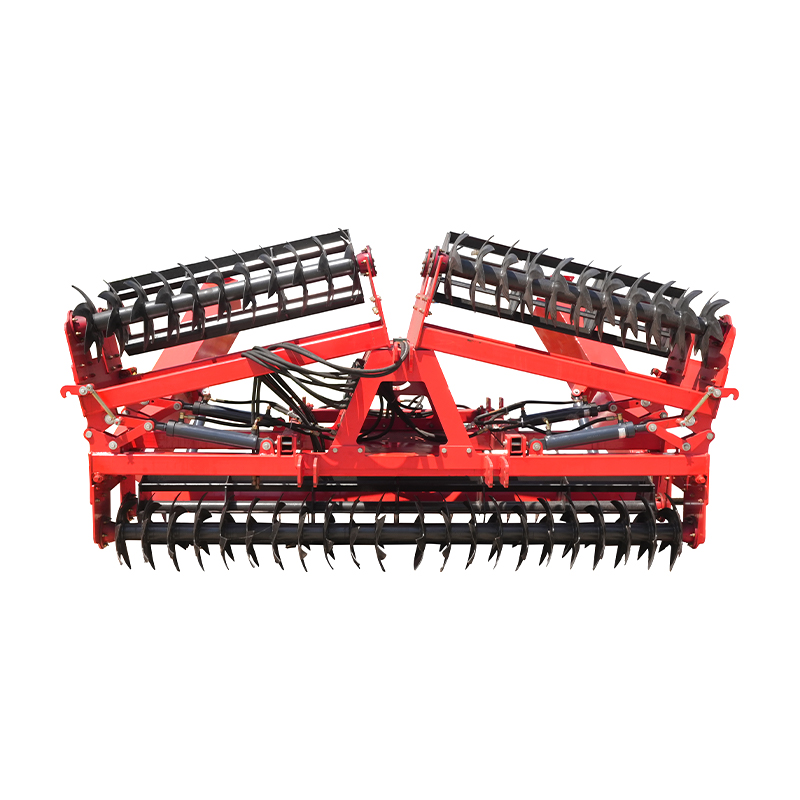
On large flooded blocks, a three-section folding puddler keeps working width wide enough to match a mid-size tractor while still folding for road transport between plots.
 Three-Section Hydraulic Folding Paddy Puddler and LevelerWith 350–590 cm working width, it suits large flooded blocks, while hydraulic folding eases transport between plots and road travel.View Product →
Rice growers judge a puddler by two results: how level the water sits after the pass, and how much of the previous crop's straw stays buried instead of floating to the surface.
Matching Tillage Implements to Tractor Power
Working width is the first number to fix, because an implement 20 cm too wide for the tractor turns every pass into a clutch and fuel problem, while an undersized unit forces a second pass over the same ground.
| Implement | Typical tractor power | Typical working width | Check before ordering |
| Semi-shaft rotary tiller | 50 to 80 hp | 1.5 to 2.0 m | Blade tip speed, side drive protection |
| Full-shaft rotary tiller | 70 to 120 hp | 1.8 to 2.6 m | Gearbox rating, rotor balance |
| Power-driven disc plow | 80 to 130 hp | 2 to 4 discs | Disc diameter, bearing sealing |
| Paddy puddler and leveler | 70 to 120 hp | 2.2 to 3.2 m | Folding mechanism, depth control |
| Combined seeding drill | 60 to 100 hp | 2.0 to 2.8 m | Metering calibration, row spacing |
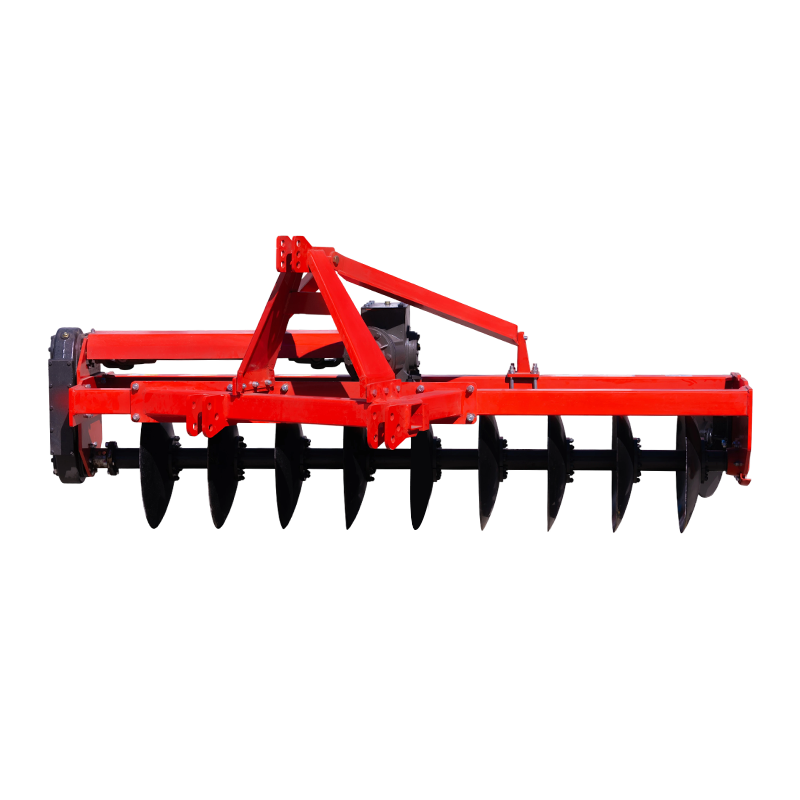
 PTO-Driven Disc Plow for Heavy Soil TillagePTO-driven discs cut, break and turn soil in one pass, with 164–332 cm widths and 15–25 cm depth for heavy or residue-covered fields.View Product →
Ask for the rated PTO power at the gearbox input, not the engine badge on the tractor bonnet, and keep roughly 15 percent in reserve for clay, heavy straw or a wet season.
When a Combined Machine Replaces Two Implements
A combined unit pays back when the pass it removes costs more than the maintenance it adds, which usually happens on larger blocks with a narrow planting window.
- Fewer trips mean less compaction and lower fuel use per hectare.
- Sowing follows tillage while soil moisture is still inside the working range.
- Calibration takes longer and must be repeated whenever seed or fertiliser changes.
- A single breakdown stops tillage and sowing at the same time, so spares matter more.
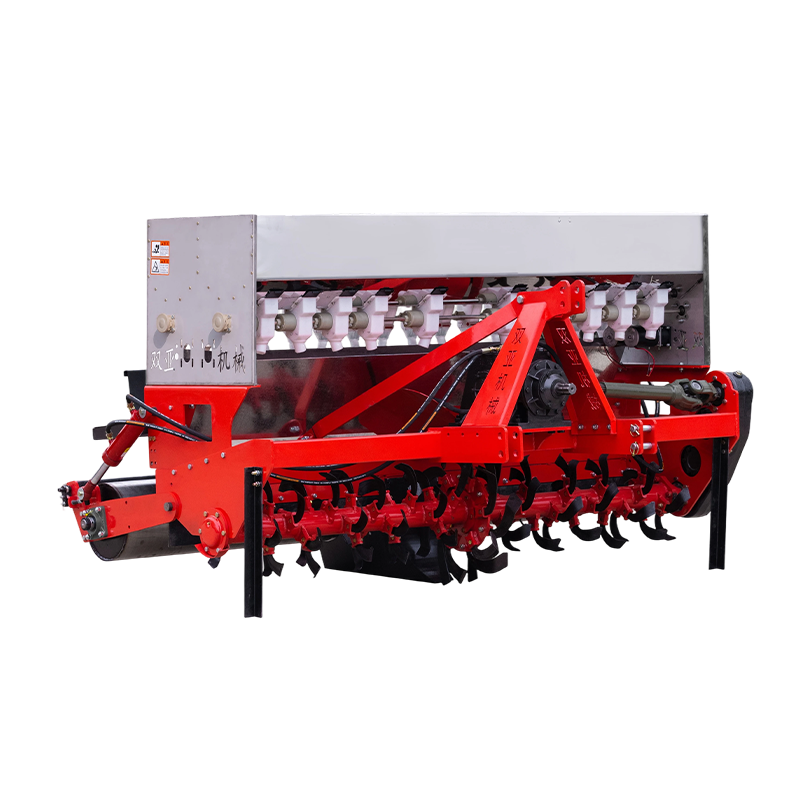
Ditching, fertilising and seeding in one frame is the pattern bought most often for row crops, where the sowing date cannot wait for a second field operation.
 Tillage, Furrowing, Seed and Fertilizer Drill CombinationCombines tillage, furrowing, fertilizing and seeding in one pass for row crops, with 200–300 cm working width and 70–140 HP requirements.View Product →
A combined machine is a scheduling decision as much as an engineering one. If the farm runs a single tractor, the pass saved can be worth more than the extra purchase price; if three tractors are already available, a separate drill is often easier to manage.
Bulk Order Checklist Before Signing
The specification sheet decides field performance, while the order sheet decides whether the machines arrive usable, so both deserve the same attention.
- Confirm the tractor fleet: PTO power, hitch category and the number of hydraulic outlets on each unit.
- Size the implement against the tractor that will run it daily, not the largest machine in the yard.
- Match blade or disc type to soil and residue, since clay content, straw load and stubble height change the choice.
- Ask for the wear-parts list and check whether blades, discs, bearings and seals are standard sizes available locally.
- Agree documentation, packaging and container loading for volume orders, plus the spare-parts quantity shipped with the first batch.
Manufacturers that cut, weld, machine and paint in house control tolerances better than assemblers buying finished frames. SUNYA Machinery, for example, runs those processes internally inside a 20,000 sqm plant with six production lines and an annual output above 2,000 units, which makes factory audits and repeat orders easier to plan.
A factory that states its capacity, its production steps and its export markets is easier to verify than one that only publishes a product gallery. Ask for both before the deposit is paid.
Frequently Asked Questions
What is the difference between primary and secondary tillage equipment?
Primary tillage equipment, such as disc plows, works below 18 cm to break compaction and bury residue. Secondary tillage equipment, such as rotary tillers, works the top 10 to 15 cm to produce a seedbed.
How much power does a rotary tiller need?
As a working guide, a semi-shaft tiller of 1.5 to 2.0 m suits 50 to 80 hp and a full-shaft tiller of 1.8 to 2.6 m suits 70 to 120 hp. Confirm the gearbox rating for your soil, since clay and heavy straw raise the requirement.
Can one machine handle both paddy and dryland tillage?
Usually not well. Puddling needs a level, slurry-tolerant rotor with depth control for flooded soil, while dryland seedbeds need clod breakdown at lower moisture. Separate implements remain the more reliable route.
What should a dealer check before ordering tillage equipment in bulk?
Check the power band, working width, blade or disc type, gearbox rating and spare-parts availability, then confirm packaging, documentation and the delivery schedule for the full quantity.
The shortest route to a lower cost per hectare is usually one fewer pass, not one more discount.

We Are Ready to Support Your Agricultural Machinery Needs
Share your requirements and we will contact you shortly with a tailored solution and professional quotation.
Copyright © Jiangsu SUNYA Machinery Ltd. All rights reserved.
 Agricultural Tillage Equipment Manufacturers in China