


 Français
 Español
 русский

Home / News / Industry News / Tractor Bed Former: Applications, Selection Criteria, and Practical Guidance
Tractor Bed Former: Applications, Selection Criteria, and Practical Guidance
Content
- 1 How a Tractor Bed Former Builds a Raised Bed
- 2 Side-Type Versus Plow-Type Bed Formers
- 3 Matching Bed Former Width to Tractor Power and Traction
- 4 Bed Geometry, Furrow Drainage and Spacing Accuracy
- 5 Soil Condition, Residue and Pre-Forming Tillage
- 6 Setup and Calibration Sequence
- 7 Wear Points, Faults and Seasonal Maintenance
- 8 What to Confirm Before You Order
- 9 Frequently Asked Questions
Two blocks on the same farm, planted with the same seed and transplanted on the same day, can still finish the season 15 percent apart on establishment. The difference is often the bed rather than the crop: ridges formed 30 mm high in one block and 65 mm in the next drain, warm and dry at different rates, and every operation that follows inherits that variation. A tractor bed former is the implement that decides which block you get.
The machine itself is not complicated. What complicates the decision is that bed geometry is created in a single pass and then copied across the whole field, so a small alignment error at the linkage becomes a field-scale problem. Buyers therefore judge a bed former on three things: how evenly it gathers soil, how well it holds the profile it has built, and how much tractor it demands to do both.
150-300 mmTypical finished bed height
600-900 mmCommon bed top width
45-120 hpTractor range across working widths
Definition: a tractor bed former is a tractor-mounted implement that converts tilled soil into raised beds of consistent height, top width and centre spacing in a single pass, shaping the bed shoulders and the furrow at the same time.
How a Tractor Bed Former Builds a Raised Bed
A tractor bed former shapes a raised bed by cutting the soil at both furrow edges, lifting it, folding it toward the bed centre and consolidating the finished profile in one continuous pass. The working sequence is nearly identical across designs, mounted or semi-mounted:
- Furrow openers, usually discs or plough bodies, separate the soil at the bed edges and set the furrow line.
- Shaping boards or powered hoods lift and fold soil toward the centre, building the bed body.
- Side plates and a rear gate control shoulder angle and keep the bed top flat rather than crowned.
- A press or cage roller consolidates the profile so it survives rain, wind and the next traffic pass.
Powered versions use a PTO-driven rotor or auger to move soil instead of relying on forward draft alone. They build a firmer bed in a single pass, but they add driveline maintenance and a second power demand on the same tractor that is already pulling the machine. Passive designs are simpler and lighter, and they suit fields where the tilth is already fine.
Because the bed top, shoulder and furrow are formed simultaneously, a bed former cannot correct an error made one metre earlier, it repeats it. Alignment and depth control matter more than working width when comparing machines.
Side-Type Versus Plow-Type Bed Formers
Side-type bed formers sweep soil inward from the furrow edges, while plow-type formers lift and turn a furrow slice with plough bodies before shaping the ridge. The distinction matters most where soil moisture, stone content and residue differ across the season.
Side-type
- Angled blades or discs move soil inward from both sides
- Works best in a uniformly tilled layer
- Lower draft per metre of width
- Common for paddy work and vegetable beds
Plow-type
- Plough bodies lift and invert a furrow slice first
- Holds height better in firmer ground
- Handles heavier residue and cloddier soil
- Higher draft, so it needs more tractor per metre
The model range follows that split directly. The ridge forming machine range pairs a side-type machine for growers shaping beds from an already tilled layer with a plow-type machine for those who need the slice lifted before shaping.
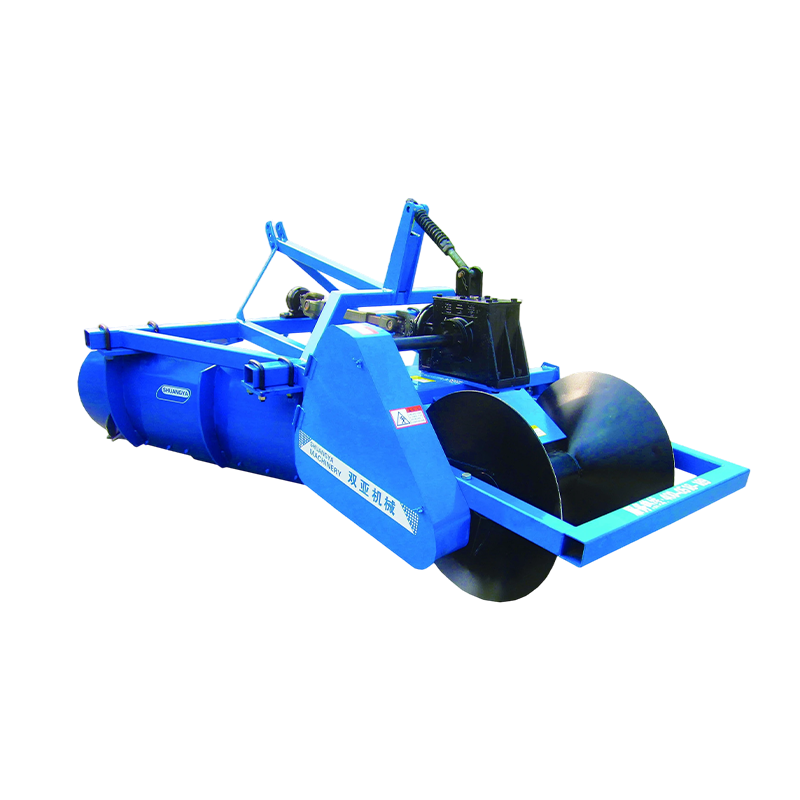
The 1ZGD side-type machine gathers soil from the furrow edges and presses the finished ridge in the same pass, which suits lighter soils and paddy work where the tilled layer is already even.
 Side-Mounted Paddy Bund Former for Field EdgesTractor-mounted, PTO-driven bund former for paddy edges, suited to lighter soils and even tilled layers; forms approximately 26 cm high bunds for terraced or irregular plots.View Product →
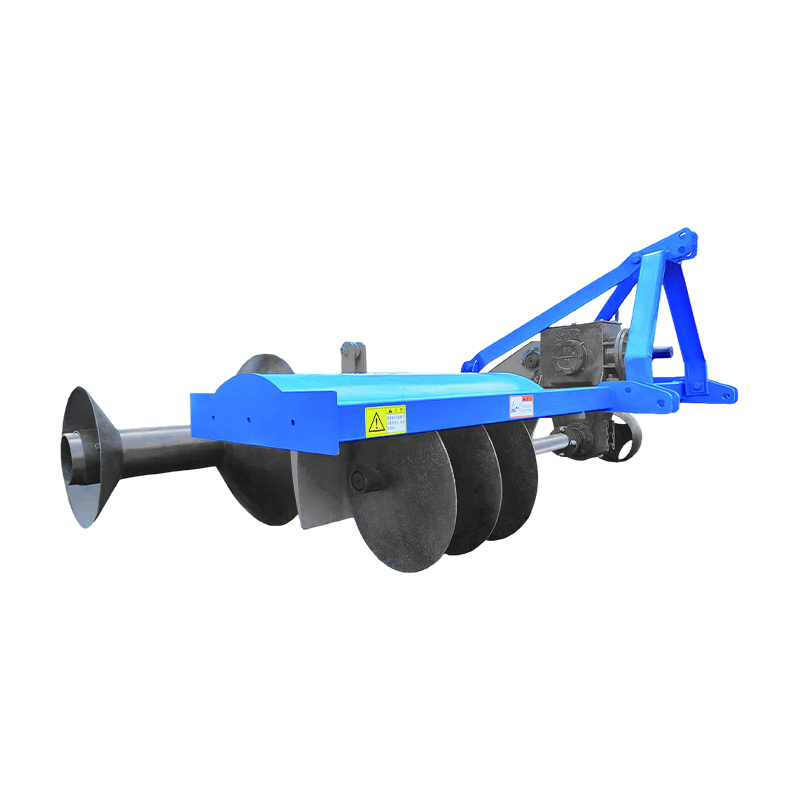
The 1ZGS plow-type machine lifts a furrow slice with plough bodies before shaping, so it holds bed height more reliably in firmer ground and where residue has not fully broken down.
 Plow-Type Paddy Bund Former for Firmer GroundPlowshare-based bund former for small or scattered paddy plots, holding bed height in firmer ground and residue; forms approximately 30 cm high bunds.View Product →
Matching Bed Former Width to Tractor Power and Traction
Bed former width should be chosen from the tractor power actually available at the drawbar on your soil, not from the maximum figure in a brochure. A machine that is one size too wide will run shallow at the headland, taper its beds on slopes and heat the operator's patience long before it heats the gearbox.
| Tractor power | Working width | Beds per pass | Bed top width | Typical use |
| 45-60 hp | 1.2-1.6 m | 2 | 600-700 mm | Light soil, single forming pass |
| 60-80 hp | 1.6-2.0 m | 2-3 | 700-800 mm | Vegetable and sugarcane bedding |
| 80-100 hp | 2.0-2.4 m | 3 | 800-900 mm | Heavier soil, higher residue |
| 100-120 hp | 2.4-3.0 m | 3-4 | 900 mm and above | Broadacre work, firm traction |
Treat those bands as a starting point, not a specification. If the field is tilled before forming, the tractor rotary tiller width and power guide is a useful cross-check, because both implements draw on the same power budget and the same soil condition.
Check traction before width: a 90 hp tractor on damp clay may hold a 2.0 m former more steadily than a 75 hp machine on the same soil, which is why ballast and tyre configuration belong in the sizing conversation.
Bed Geometry, Furrow Drainage and Spacing Accuracy
Bed height, bed top width and centre-to-centre spacing decide drainage, soil temperature and how well following machinery tracks, so each should be written as a tolerance rather than a single number. A supplier who can state a tolerance is usually a supplier who can hold one.
A practical starting specification for vegetable and row crop work is a bed height of 150-300 mm held within about plus or minus 15 mm, a top width of 600-900 mm within about plus or minus 30 mm, and centre spacing that matches the transplanter or seeder wheel track within 20 mm. Record the following at the first pass of every season:
- Bed height at five points per 50 m, measured from the furrow bottom
- Top width at the same points, to catch a bed that is wide at the base and narrow at the crown
- Shoulder angle, which controls how quickly the bed sheds water
- Furrow depth and continuity, which control drainage along the low end of the field
- Centre spacing from bed centre to bed centre, checked against the planter track
Bed height measured from the furrow bottom, not from the original soil surface, is the only figure that tells you what the crop will actually sit in.
Soil Condition, Residue and Pre-Forming Tillage
A bed former works best in soil that has already been tilled to a uniform 120-180 mm depth and is at roughly 60 to 70 percent of field capacity; forming in wet or cloddy soil produces beds that slump within days. Soil that balls in the hand or smears on the shaping board is too wet, and no adjustment will fix it for that day.
Residue is the second constraint. Long straw wrapped around a furrow disc changes the bed edge more than any setting on the machine, so a chopping or incorporation pass before forming usually pays for itself in the first field. A shallow pre-forming pass with a rotary tiller or disc plough also reduces the draft spike that occurs when a former is asked to build a bed out of untilled ground.
A bed that slumps 30 mm after the first rain was formed at the wrong moisture content, not at the wrong height. Field condition is a setting, and it is the one setting most operators skip.
Setup and Calibration Sequence
Calibrate a bed former in this order, because each step depends on the one before it, and adjust only one setting per test run. Working through the sequence on a flat headland rather than in the crop saves a second pass over the whole field.
- Level the implement on a firm flat pad with the lower links set to the intended working depth, and confirm the machine sits square to the tractor centre line.
- Set the furrow openers to the required bed width and check that both sides are symmetrical; an asymmetric cut produces beds that lean.
- Set working depth so the shaping bodies carry the soil rather than the linkage, then check that the top link floats instead of locking the frame.
- Set the press roller so the bed holds its shape when a boot is pressed into the shoulder, and so the roller is still turning at the end of the run.
- Make a 30 m test run and measure bed height, top width and centre spacing at three points, then change one setting and repeat.
Write the final settings down and photograph the linkage. Next season the same numbers get you to within one adjustment instead of starting from zero.
Wear Points, Faults and Seasonal Maintenance
Most bed former faults show up in the bed before they show up on the machine, so the useful inspection routine is a bed measurement followed by a walk around the implement. Check these points on a fixed interval rather than when something looks wrong:
- Shaping board and blade edges for rounding and wear, which taper the bed top
- Press roller bearings and seals for play, which shows as a wavy bed surface
- Furrow disc hubs and scrapers for build-up, which drags the bed edge outward
- Linkage pins, A-frame and mounting brackets for elongation and cracking
- Fasteners across the frame after the first 10 hours, then at each service interval
A tapered bed usually means worn shaping edges. A bed that varies in height between passes usually means depth control is being carried by the linkage rather than the machine. A ragged shoulder usually means the press roller or side plate is out of alignment rather than worn out.
Keep a spare set of furrow discs and roller bearings on the shelf. Both fail in the middle of a forming window, and neither is worth a two week wait when the beds are already late.
What to Confirm Before You Order
Before ordering a bed former, confirm seven things in writing, because these are the points that decide whether the machine works in your field rather than in a demonstration plot.
- Linkage category and mounting dimensions against your tractor, including lower link spread and top link position
- Working width against the power you actually have on your heaviest soil
- Adjustable bed height and top width ranges, not just the nominal figures
- How centre spacing is changed, whether by bolt pattern, shims or a mechanical slide
- Soil and residue suitability for your conditions, stated as a range rather than a claim
- Spare parts availability for blades, discs, bearings and press roller
- Documentation that states tolerances and wear limits, which is the clearest signal of manufacturing discipline
If a supplier cannot tell you the wear limit on a shaping board, the specification sheet is decoration, not information.
Frequently Asked Questions
What does a tractor bed former do?
A tractor bed former builds raised beds in a single pass by cutting soil at the furrow edges, lifting and folding it toward the bed centre, shaping the shoulders and consolidating the finished profile with a roller.
Can one bed former handle both vegetable beds and paddy ridges?
Often yes, provided the working width, bed height and spacing ranges cover both jobs and the soil condition suits the design. Side-type machines are generally the better fit for paddy work, while plow-type machines suit firmer ground and heavier residue.
How much tractor power does a bed former need?
As a working starting point, 45-60 hp covers a 1.2-1.6 m width, 60-80 hp covers 1.6-2.0 m, and 80-120 hp covers 2.0-3.0 m. Add margin for damp clay, slopes and any pre-forming tillage drawn from the same tractor.
How do I keep bed height consistent across a long field?
Carry depth on the machine rather than the linkage, keep the top link floating, check press roller adjustment before each season, and measure bed height at fixed intervals during the first pass instead of judging it from the tractor seat.
Consistency is a measurement habit, not a feature. Growers who measure bed height every 50 m get better beds from a mid-range machine than growers who never leave the cab.

We Are Ready to Support Your Agricultural Machinery Needs
Share your requirements and we will contact you shortly with a tailored solution and professional quotation.
Copyright © Jiangsu SUNYA Machinery Ltd. All rights reserved.
 Agricultural Tillage Equipment Manufacturers in China