


 Français
 Español
 русский

Home / News / Industry News / Agricultural Tillage Equipment: A Practical Field and Buying Guide for Export Buyers
Agricultural Tillage Equipment: A Practical Field and Buying Guide for Export Buyers
Content
- 1 What Agricultural Tillage Equipment Covers
- 2 Matching the Implement to Tractor Power and Soil
- 3 Wet-Field Work: Puddling, Leveling and Straw Handling
- 4 Primary Tillage and Combination Machines
- 5 Bunds, Furrows and Drainage
- 6 Seeding and Fertilizing in One Pass
- 7 What to Confirm Before Ordering
- 8 Frequently Asked Questions
Two quotations for the same 1.8 m rotary tiller rarely differ by accident. One price covers the gearbox and the frame; the other covers the gearbox, the blade spec, the shaft type, and how the machine will behave in a field that carried rice last season. Agricultural tillage equipment is bought as a sequence, not as a single unit: primary tools break the compaction layer, secondary tools build the seedbed, and paddy work needs a different set of implements altogether. The categories, matching criteria, and pre-order checks below are the parts that usually decide whether a purchase still works in its second season.
What Agricultural Tillage Equipment Covers
Agricultural tillage equipment covers every implement that changes soil physically before or around planting, and the fastest way to compare offers is to sort machines by the job they do rather than by the name printed on the catalogue page.
Agricultural tillage equipment is any tractor-mounted or trailed implement that mechanically loosens, inverts, mixes, levels, or forms soil so that seed can be placed and crop residue can be managed.
Four working groups account for most purchasing decisions:
- Primary tillage: moldboard plows, disc plows and chisel tools that break compaction and bury residue, typically working 15 to 35 cm deep.
- Secondary tillage: rotary tillers and light discs that work the top 15 cm into a seedbed with a controlled clod size.
- Paddy-specific tillage: puddling, leveling, straw incorporation and stubble burying, all carried out in standing water.
- Shaping and placement: bund formers, rotary ditchers and drills that build beds, open furrows, and place seed and fertilizer in one pass.
Factories that build across several of these groups organise production by process rather than by model. SUNYA Machinery, for instance, keeps cutting, welding, machining, painting and final assembly in house, so a tiller frame and a drill frame pass through the same dimensional checks.
20,000sq m production facility
6modern production lines
2,000+machines per year
30+export markets served
Matching the Implement to Tractor Power and Soil
Power match decides whether an implement works at its stated depth or simply skims across the surface, and it is worth settling before a single price is compared.
Three variables set the requirement: the depth the agronomy demands, the soil's resistance at that depth, and the residue still standing on the surface. A 90 hp tractor that pulls a 3 m tiller comfortably in a sandy loam will struggle with the same width in heavy clay after a wet harvest. Suppliers usually publish a power band per working width; treat the lower figure on that band as a dry-soil number and size upwards for paddy or untilled stubble.
| Implement family | Working depth | Power demand | Main risk |
| Moldboard or disc plow | 20 to 35 cm | High, traction limited | Bringing infertile subsoil to the surface |
| Chisel or subsoiler | 25 to 40 cm | Very high, needs weight | Smearing in wet clay instead of shattering it |
| Rotary tiller | 10 to 18 cm | Medium to high, PTO driven | Over-pulverising and creating a shallow pan |
| Power-driven disc plow | 18 to 30 cm | High, PTO driven | Cost per hectare on light, easy soil |
| Puddler and leveler | 5 to 15 cm in water | Medium | Poor levelness when float response is weak |
| Seed and fertilizer drill | 3 to 8 cm | Low to medium | Blocked outlets and uneven metering |
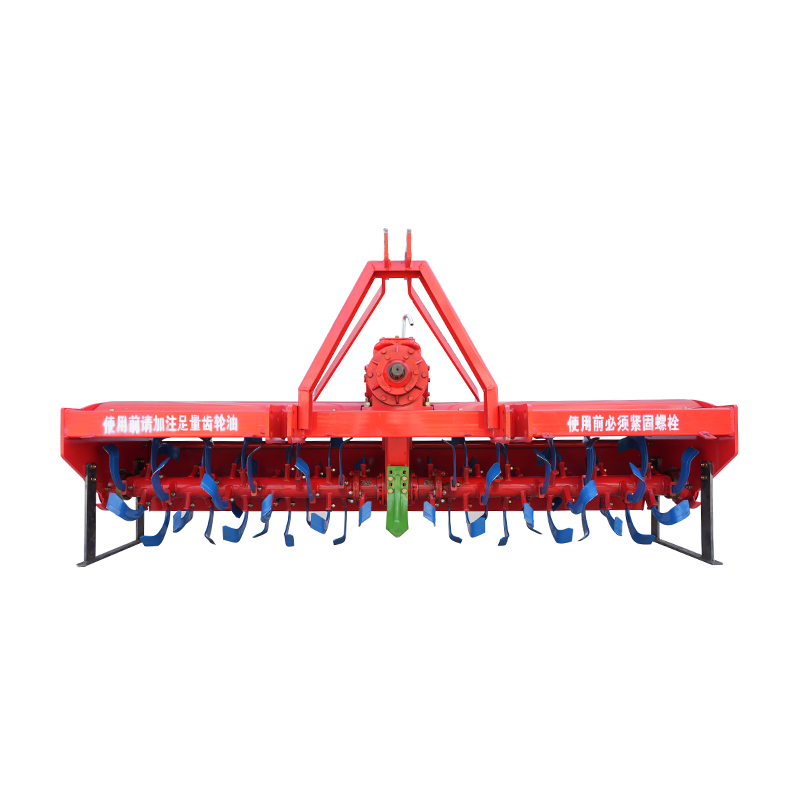
Rotary tillage deserves a separate note because width and blade geometry drive both the power figure and the finish. This guide to tractor rotary tiller width, power and blade choice walks through the geometry; for a baseline machine, the fullshaft arrangement below is the version most buyers start from.
 Full-Width Rotary Tiller for Dry and Wet FieldsA tractor-mounted, PTO-driven tiller with a one-piece rotor, 200–300 cm working widths, and 52–112 kW power range for dry and wet field preparation.View Product →
Wet-Field Work: Puddling, Leveling and Straw Handling
In paddy fields the objective of tillage changes from aeration to water control, so puddling, leveling and straw handling are one combined job rather than three separate passes.
A wet-field implement has to do four things in a single run: flatten the surface, incorporate the straw so it does not float and rot unevenly, churn the topsoil into a slurry that holds water, and bury the stubble from the previous crop. Machines that handle only one of those tasks usually cost more in passes than they save at purchase.
- Flattening: a leveling board behind the rotor removes the high spots that leave seedlings dry.
- Straw incorporation: chopped residue must be mixed into the slurry, not left as a mat on the surface.
- Puddling: repeated working of the saturated layer reduces percolation losses.
- Stubble burying: non-powered units trade active drive for lower running cost on lighter loads.
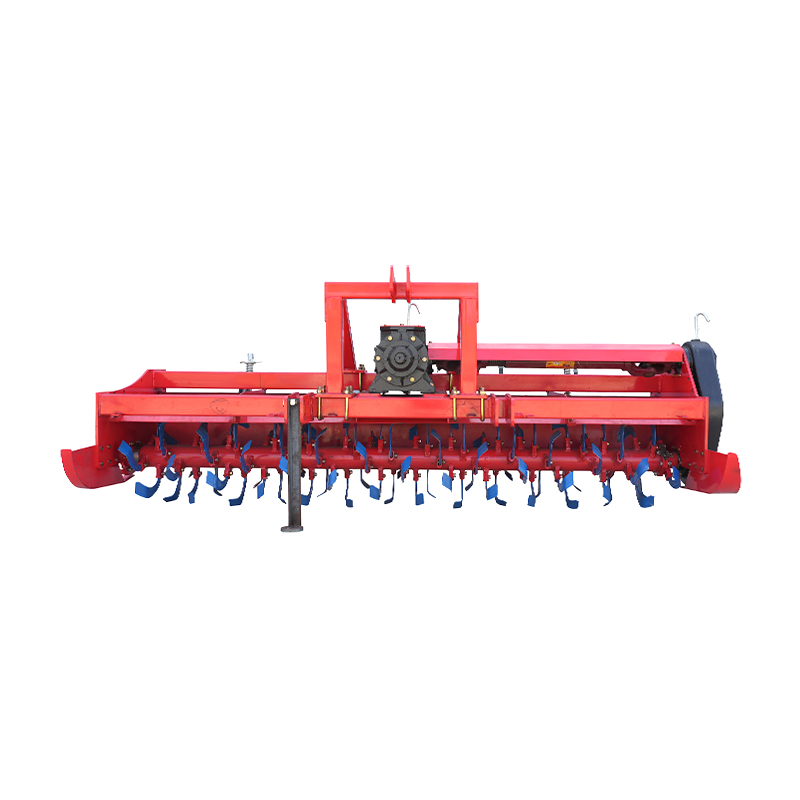
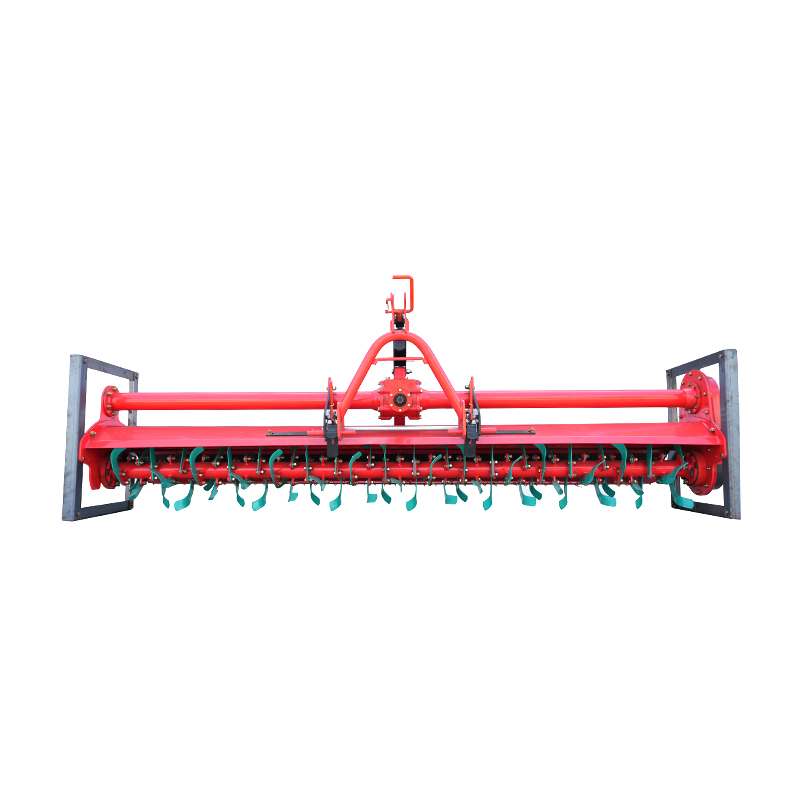
Transport width decides the configuration more often than agronomy does. Three-section folding frames fold down to road width at larger working widths, two-section frames suit smaller and more fragmented fields, and fullshaft builds carry the drive across the full housing for steadier torque in deep slurry.
A paddy field that finishes level to within a few centimetres uses less irrigation water, germinates more evenly, and needs fewer passes next season. Pudding depth matters far less than the levelness of the final surface.
 Three-Section Hydraulic Folding Paddy Puddler and LevelerA wide PTO-driven paddy implement for 350–590 cm working widths, combining puddling, straw incorporation and leveling; hydraulic folding aids transport.View Product →
Primary Tillage and Combination Machines
A power-driven disc plow holds working depth in dry, hard or residue-heavy soil where a passive implement rides out of the ground, and that consistency is what the extra cost buys.
Beyond that, the real decision is usually between running separate implements and investing in a machine that combines two operations on one frame. Both routes are defensible, but they fail for different reasons.
Separate implements
- Lower entry cost per unit and simpler financing
- Each tool can be optimised for one soil condition
- More passes, more fuel, more labour hours
- More compaction from repeated wheel traffic
Combination machine
- One pass covers plowing and rotary cultivation
- Less traffic over the same hectare
- Higher purchase price and higher power demand
- A single failure stops two operations at once
On rented land with short turnaround windows, the combination route usually pays back within two or three seasons. On small holdings where the tractor is already near its power limit, separate lighter implements remain the safer buy.
Bunds, Furrows and Drainage
Bund forming and ditching are water-management operations, and getting them wrong costs more than the implement itself.
Ridge and bund shape determines how water sits in a field and how machinery crosses it. Side-type and plow-type ridge forming machines reach different profiles from the same tractor class, and the choice should follow the field layout rather than the price list. The bund former range separates the two designs for exactly that reason.
- Check the finished bund height against the irrigation depth you plan to hold.
- Confirm the discharge side of a trencher against the direction water must leave the field.
- Match the ridge spacing to the seeder or transplanter that will follow it.
Seeding and Fertilizing in One Pass
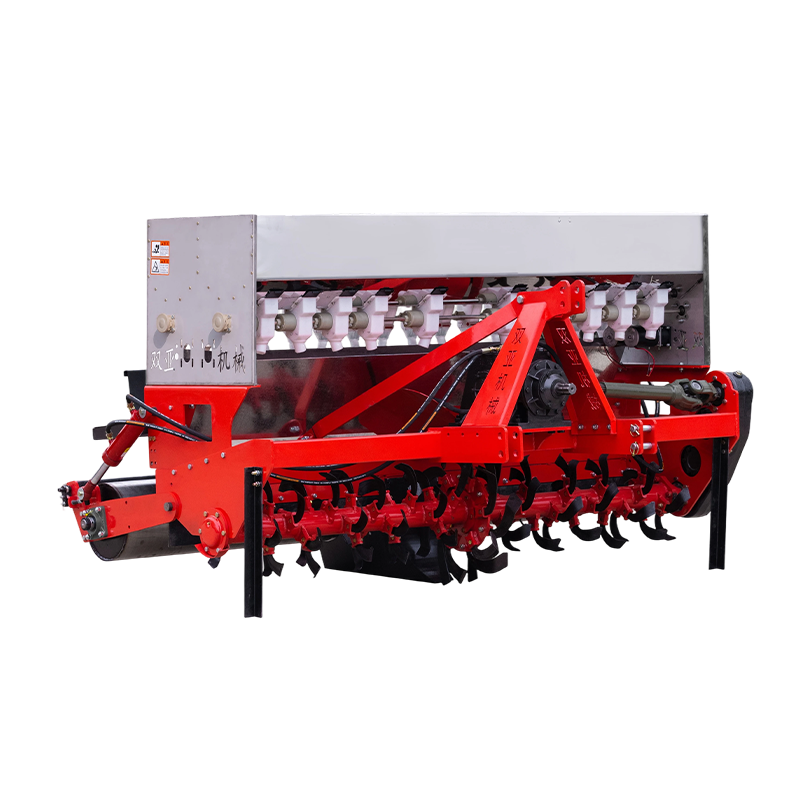
A combined tillage, ditching, fertilizing and seeding drill removes one or two passes per season, but only when the metering is calibrated to the field rather than to the catalogue.
- Confirm the seedbed left by the tillage pass is fine enough for the opener type, with no clods larger than the furrow width.
- Set furrow opener depth against soil moisture, then verify by exposing a seed trench across the full working width.
- Calibrate fertilizer delivery separately from seed, since granule size and flow rate change with humidity.
- Catch seed from several outlets over a set distance and weigh it, rather than trusting the scale on the hopper.
- Run a short strip, then inspect depth consistency, seed-to-fertilizer separation and closing over the furrow.
 Combined Tillage, Furrowing, Seed and Fertilizer DrillA PTO-driven combination drill for one-pass tillage, furrowing, fertilizing and seeding, with 200–300 cm widths and hydraulic ground-wheel compaction adjustment.View Product →
Placement quality matters more than pass count. Fertilizer banded too close to the seed damages germination, and a drill that places accurately at a modest forward speed usually beats a wider machine running too fast.
What to Confirm Before Ordering
Five points decide whether a tillage purchase still looks sensible three seasons later, and every one of them can be checked before the deposit is paid.
- Power match at the actual working depth, not at the depth quoted in the brochure.
- Residue handling: will the machine cut through the straw load your last harvest left behind.
- Spare-parts commonality: blades, bearings and seals available from stock rather than on a six-week order.
- Transport width and weight against your trailer, gateways and road rules.
- After-sales response time in writing, with a named contact rather than a general mailbox.
Ask for the illustrated spare-parts list with part numbers before the deposit, not after the first breakdown. A supplier that can produce it quickly usually also holds stock of what is on it.
On the supply side, SUNYA Machinery has built agricultural machinery since 2010, employs more than 20 engineers and technicians, ships to over 30 countries across Southeast Asia, South America, Russia, the Middle East and Africa, and accepts flexible customization on batch orders. That matters when a dealer needs a frame width or blade spacing that is not on the standard list.
Frequently Asked Questions
What is the difference between primary and secondary tillage equipment?
Primary equipment breaks the compaction layer and buries residue, usually 15 to 35 cm deep. Secondary equipment works the top 15 cm to produce a seedbed with a consistent clod size and a level surface.
How much tractor power does a rotary tiller need?
It depends on working width, blade type and soil. Suppliers publish a power band per width; use the lower figure for dry, light soil and size above the upper figure for paddy slurry, heavy clay, or a single-pass seedbed in untilled stubble.
Why do paddy fields need puddling and leveling instead of ordinary tillage?
Because the goal changes from aeration to water control. Puddling reduces percolation losses, straw incorporation stops residue from floating and rotting unevenly, and leveling keeps germination even across the field.
Can one machine handle tillage, fertilizing and seeding?
Yes, combined drills do exactly that, but they demand careful calibration. Verify opener depth, metering rate and seed-to-fertilizer separation on a short strip before committing the whole field.
Buy tillage equipment as a system: the tractor, the soil, the residue load and the water all set the specification before a single model number is chosen. Get the sequence right and the cheapest machine in the quotation is often the one that keeps working.

We Are Ready to Support Your Agricultural Machinery Needs
Share your requirements and we will contact you shortly with a tailored solution and professional quotation.
Copyright © Jiangsu SUNYA Machinery Ltd. All rights reserved.
 Agricultural Tillage Equipment Manufacturers in China