


 Français
 Español
 русский

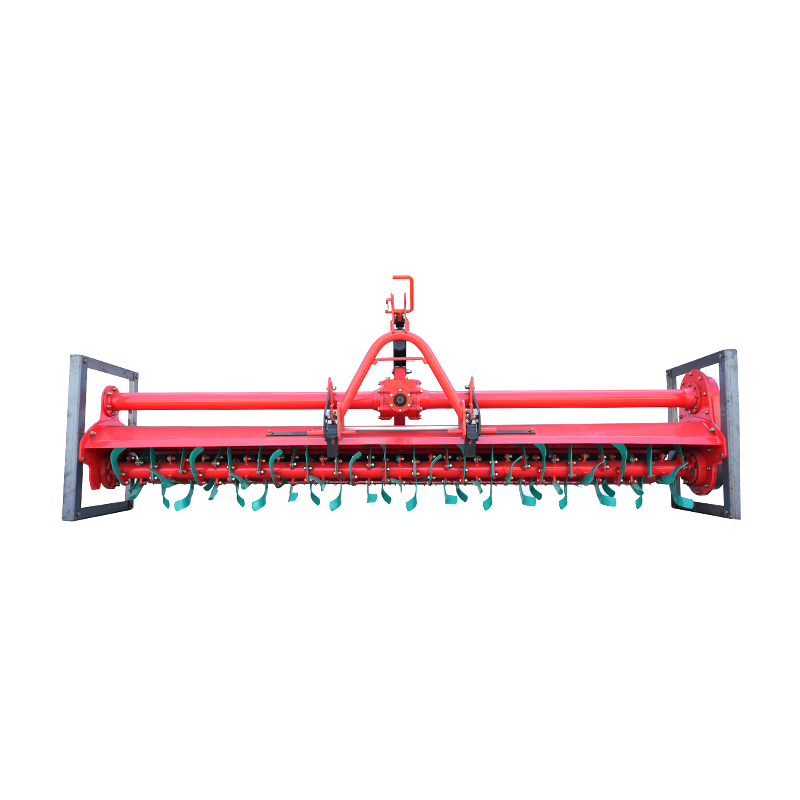
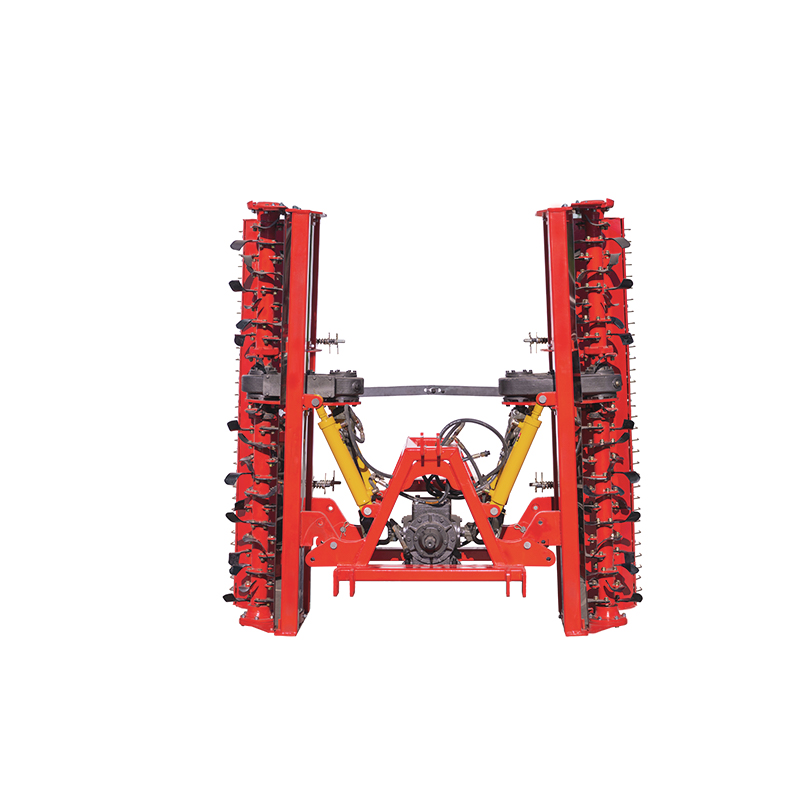
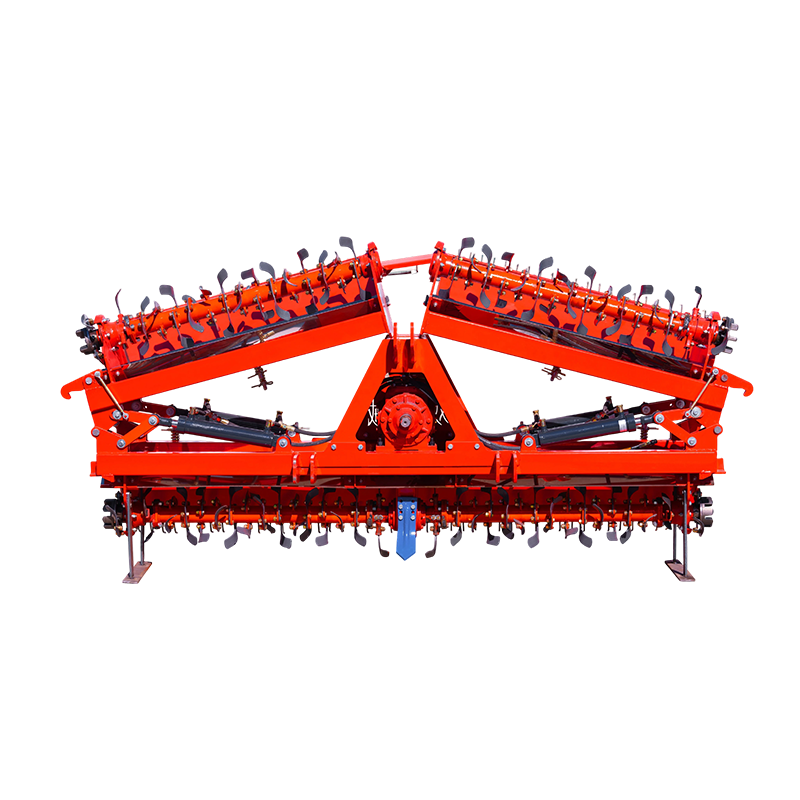
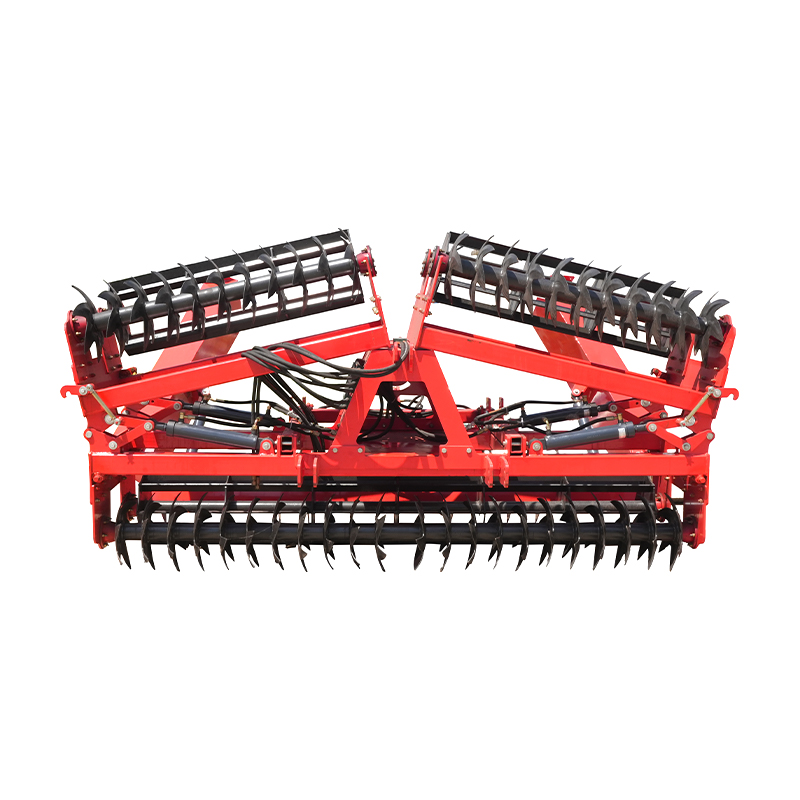


One Pass: Puddling, Residue Incorporation and Leveling
Traditional paddy preparation separates plowing, harrowing, residue handling and final leveling into several passes with separate equipment. Our implements combine those functions, which reduces field operations and the manual work that usually follows final leveling.
- Soil breaking and mixing: high-speed rotating puddling blades break compacted soil and blend it with field water into a fine, uniform puddled layer without large clods or inconsistent mud.
- Residue and straw incorporation: the blades cut, press and incorporate crop residues in the 30–45 cm range, together with straw and weeds, into the puddled soil.
- Fertilizer incorporation: applied fertilizer is mixed into the puddled layer during the same pass.
- Field leveling: the rear leveling board or hydraulic leveling system produces a smooth surface for more consistent water depth, less ponding and better conditions for rice transplanters.
Field Conditions, Water Depth and Operating Practice
Puddling quality follows field preparation more closely than machine settings. Our recommended sequence is rotary tillage first, then flooding, then a soak of about 48 hours to soften the sub-layer.
Before operation, drain the field until the water level sits roughly 2 cm above the soil surface. Under these conditions the rotor can break, mix and level the soil with consistent results, and the leveling mechanism can carry mud across the surface instead of pushing standing water ahead of the board.
Working conditions that suit the range: single-cropping and double-cropping rice areas, clay and heavy wet soils, mixed soil farming, and plots where residue is returned to the field rather than burned.
Configuration and Customization Options
Many of our exported models began as customer-specific builds, so configuration sits at the centre of how we quote puddlers and levelers rather than as an exception. Adjustable variables include working width, working depth, blade shaft, blade angle and gearbox ratio, supported by reinforced variants for harsh field conditions.
- Development from drawings, samples or a described field requirement.
- Localised adaptation to tractor power, PTO speed and hitch category.
- Blade configuration matched to straw load, soil type and target puddled depth.
- Leveling board or hydraulic leveling arrangement selected for the water-management regime.
- Folding format chosen around access roads, headlands and container loading.
Integration with the Rest of the Paddy Preparation Line
The puddler and leveler sits between primary tillage and crop establishment. We supply the surrounding implements from the same factory, which keeps working widths, hitch formats and tractor power bands consistent across a fleet.
- Rotary Tiller — the first pass, and the conversion target for the 1JS folding machine when the puddling season ends.
- Bund Former — rebuilds and shapes field bunds so leveled plots retain water evenly.
- Tillage, furrowing, seed and fertilizer drill — for direct-seeding programmes where the leveled paddy surface is followed by a seeding pass.
- Three-Section Hydraulic Folding Paddy Puddler & Leveler — the wide-format option for large blocks with narrow access roads.
Manufacturing, Inspection and Export Packaging
Cutting, welding, machining, coating and final assembly are completed in-house under ERP-based production management, with six production lines and annual output above 2,000 complete machines. Frames on this range are reinforced and transmission components are thickened for wear resistance in mud, clay and stony ground.
- Stage inspections through every production step, with 100% final inspection against customer specifications.
- National High-Tech Enterprise status, a provincial postgraduate R&D station, joint development with universities, and invention, utility model and design patents held.
- Export-ready packaging and container loading, with FCL and LCL shipping arranged from Lianyungang Port about 50 km from the factory.
- More than 30 export markets, including Russia, Indonesia, Brazil, Argentina, Spain, Italy, South Korea, Australia and Canada.
Information We Use to Configure Your Solution
A workable configuration comes from the field and the tractor, not from the model list alone. The table below shows what changes when each input changes, and what we ask for in the first exchange.
| Project information | What it determines in the proposal |
|---|---|
| Tractor model, rated power and PTO speed | Matched model, gearbox ratio and shaft drive arrangement |
| Field size, plot length, headland and access road width | Rigid, two-section or three-section format, and folding type |
| Soil type, sub-layer condition and prior tillage pass | Blade angle, working depth and leveling board setting |
| Straw and residue load returned to the field | Blade pattern and anti-tangling housing specification |
| Water management and target puddled depth | Leveling mechanism type and operating guidance settings |
| Container and transport limits, spare-part plan | Packing scope, folding configuration and wear-part kit |
Spare Parts, Documentation and Long-Term Support
We manufacture mechanical parts in-house, including blades, harrow tines and bearings, so wear items on the puddler and leveler can be replenished from the same production system that built the machine. Shipments are prepared with export packaging and loaded to suit the transport mode confirmed at quotation.
Each order is supported through inquiry, production, shipment and operation, with working-day replies within 12 hours and operation guidance covering the field preparation sequence described above.
FAQs
What tractor power suits a SUNYA paddy puddler and leveler?
The 1JSL full-width machines run on 50–90 hp tractors at 260 cm and 280 cm. The 1JS two-section folding range starts at 90–100 hp for 350 cm and reaches 180 hp and above at 590 cm. The 1GKNZ three-section range covers 90–120 hp at 350 cm up to above 220 hp at 590 cm. Final matching depends on soil type, straw load and working depth.
Can the machine incorporate straw and stubble at the same time as puddling?
Yes. The rotating blades cut, press and mix crop residues, straw and weeds into the puddled soil during the same pass, and the specially designed blade housing improves airflow as each blade enters the ground to limit wrapping around the blade shaft.
How should the field be prepared before puddling?
Rotary-till the field first, flood it, and let the soil soak for about 48 hours. Drain before operation until the water level is approximately 2 cm above the soil surface, which gives better puddling and leveling performance than working in deep standing water.
How is transport width handled on wide models?
The 1JS machines fold vertically from the centre, and the 1GKNZ machines use three-section hydraulic folding with mechanical locks at the folding points. Both keep a wide working width while reducing transport width for road travel and storage. The 1JS family can additionally be converted into a conventional rotary tiller.
Is a PTO-free option available?
Yes. The Three-Section Hydraulic Folding Non-Powered Paddy Leveler is tractor-drawn and PTO-free, intended for paddy field stubble burying and leveling where the tractor's power take-off is needed elsewhere in the sequence.
What do you need from us to prepare a configuration and quotation?
Send the tractor model and rated power, field size and access conditions, soil type and prior tillage, straw load, target puddled depth and water depth, plus any container or transport limits. With those inputs we confirm model, working width, blade configuration, leveling arrangement, folding format, packing scope and wear-part provision.