


 Français
 Español
 русский

Home / News / Industry News / Wood Chipper Buying Guide: Feed Opening, Head Type, PTO Matching and Blade Care
Wood Chipper Buying Guide: Feed Opening, Head Type, PTO Matching and Blade Care
Content
- 1 What a Wood Chipper Does, and Where It Stops
- 2 Drive Type: Tractor PTO or Standalone Engine
- 3 Capacity: Read the Feed Opening Before the Diameter
- 4 Drum or Disc, and When a Mulcher Fits Better
- 5 Matching the Chipper to the Tractor
- 6 Maintenance and Safety Routine
- 7 Buying Checklist and Cost of Ownership
- 8 Frequently Asked Questions
Most wood chipper purchases go wrong in the same place: the buyer sizes the machine to the average branch instead of the worst one. A forked limb, a wet green stem or a bundle of vines will stop a rotor far faster than any diameter figure on the brochure suggests. The checks below are the ones that separate a chipper earning its keep on an orchard row from one that becomes a shed ornament after a single season.
What a Wood Chipper Does, and Where It Stops
A wood chipper reduces limbs, prunings and brush into uniform chips by dragging the material past hardened blades mounted on a rotating disc or drum, then throwing the chips clear through a discharge chute.
Definition: a wood chipper is three systems working in sequence, an infeed that grips, a cutter head that shears and a discharge that clears. Real capacity is set by the weakest of the three, not by the largest number on the specification sheet.
That is why a machine rated for 100 mm can still refuse a 60 mm fork. The throat takes it, the blades cannot shear it cleanly, and the discharge cannot clear the stringy pieces, so the rotor slows and the operator starts forcing material. Keep the three systems separate in your head and most specification sheets become readable.
| Machine type | Best feed stock | Output | Typical setting |
| Disc chipper | Straight, clean limbs up to the rated diameter | Uniform chips, commonly 10-25 mm | Orchard prunings, roadside and estate work |
| Drum chipper | Branched, irregular and mixed material | Coarser chips at higher volume | Land clearing and bulk volume |
| Shredder or grinder | Soft brush, leaves, vines, pallets | Torn mulch of uneven size | Garden and yard cleanup |
| Flail mulcher | Grass, stalks, light regrowth, laid in place | Finely cut residue spread on the surface | Orchard inter-rows and cover crops |
Chippers are often confused with mulchers. A flail mulcher never collects or chips anything: it cuts standing or laid residue where it lies, which is the right tool when the material should return to the soil surface instead of being carted away.
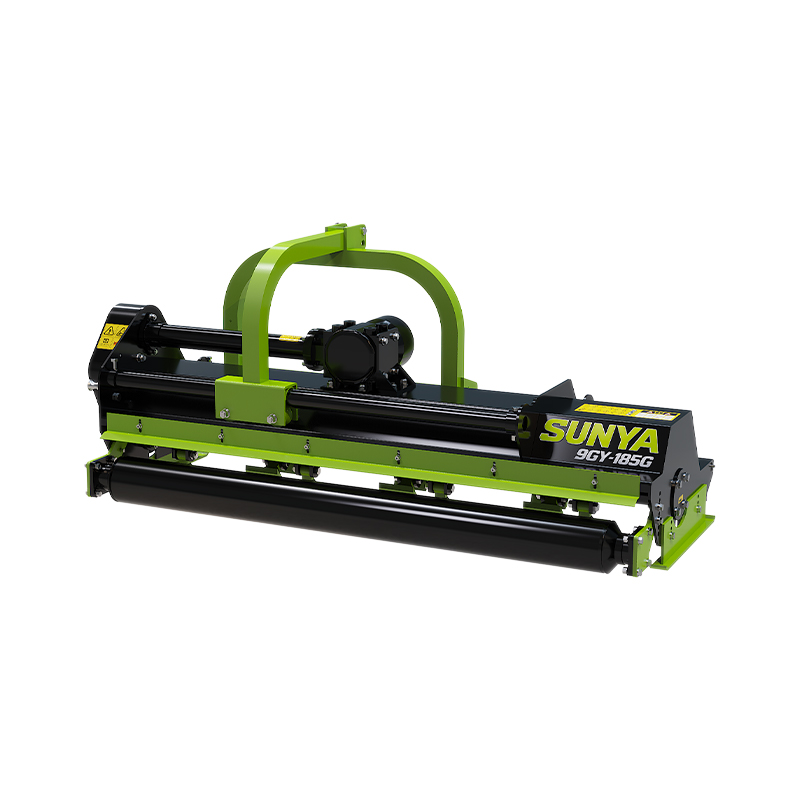 MENASOR Hydraulic Side-Shift Flail Mulcher SeriesTractor-mounted mulcher for cutting and shredding grass, weeds, crop residue, and light woody vegetation in place, with hydraulic offset for orchard and vineyard rows.View Product →
Drive Type: Tractor PTO or Standalone Engine
A wood chipper is either driven by the tractor PTO or by its own engine, and the correct answer follows from where the material lies rather than from the purchase price.
PTO driven
- Uses power you already own and maintain.
- No second engine to fuel, service or store.
- Cannot reach ground the tractor cannot reach.
- Hydraulic feed depends on tractor oil flow.
Engine driven
- Works behind fences, on slopes and in tight yards.
- Independent of tractor availability.
- Own fuel system, own servicing, own noise.
- Towable models suit crews moving between sites.
Rule of thumb: material already inside the block favours a PTO chipper, because the tractor is there anyway. Material behind a gate the tractor cannot pass favours an engine unit, even at twice the noise.
Capacity: Read the Feed Opening Before the Diameter
The rated branch diameter on its own says very little. Feed opening shape, infeed type and discharge design decide what a chipper will actually swallow on a working day.
10-25 mm
Typical chip length; longer chips break down slowly, shorter chips blow further
2-6
Blades on a farm scale cutter head; more blades give finer chips and a heavier power draw
0.5-2 mm
Blade to anvil clearance; a wide gap tears the wood instead of cutting it
540 rpm
Standard PTO shaft speed; 1000 rpm appears on larger implements
Hydraulic feed rollers add cost and a hydraulic circuit, but they are what makes a chipper civil with forked and stringy material. On gravity feed the operator effectively becomes the feed mechanism, and that is where most chipper injuries begin.
A rectangular opening accepts flat, forked limbs that a round throat of the same nominal diameter rejects. Discharge height matters as much as throat size: a chute that blows chips into a trailer saves an hour of raking a day, while a low chute aimed at the ground turns every job into a cleanup exercise.
Drum or Disc, and When a Mulcher Fits Better
A disc head cuts cleanly and holds chip size well, while a drum head tolerates branched, irregular feed and moves more volume per hour.
| Aspect | Disc head | Drum head |
| Cutting action | Blades on a vertical plate shear across a fixed anvil | Blades on a full width cylinder shear along a bed knife |
| Feed tolerance | Best with straight, even material | Better with forks and mixed bundles |
| Chip quality | Consistent, blocky chips | Coarser chips with more size variation |
| Power demand | Moderate, efficient on dry wood | Higher, with more flywheel effect |
| Maintenance | Quick blade access, simple edge setting | More blades to set, longer service window |
| Best fit | Orchard prunings and repeated light work | Land clearing and heavy irregular volume |
Chip quality is a blade question first and a head question second. Dull blades on a good disc produce torn, stringy chips; sharp blades on a modest drum produce clean ones. Budget for steel, not for marketing.
Neither head replaces a mulcher when the job is grass, cover crop or soft green stalks lying on the surface. In that case the flail mulcher leaves residue where it belongs and the chipper stays in the shed. Where the material really is branches and the aim is chips, a purpose built chipper remains the reference machine.
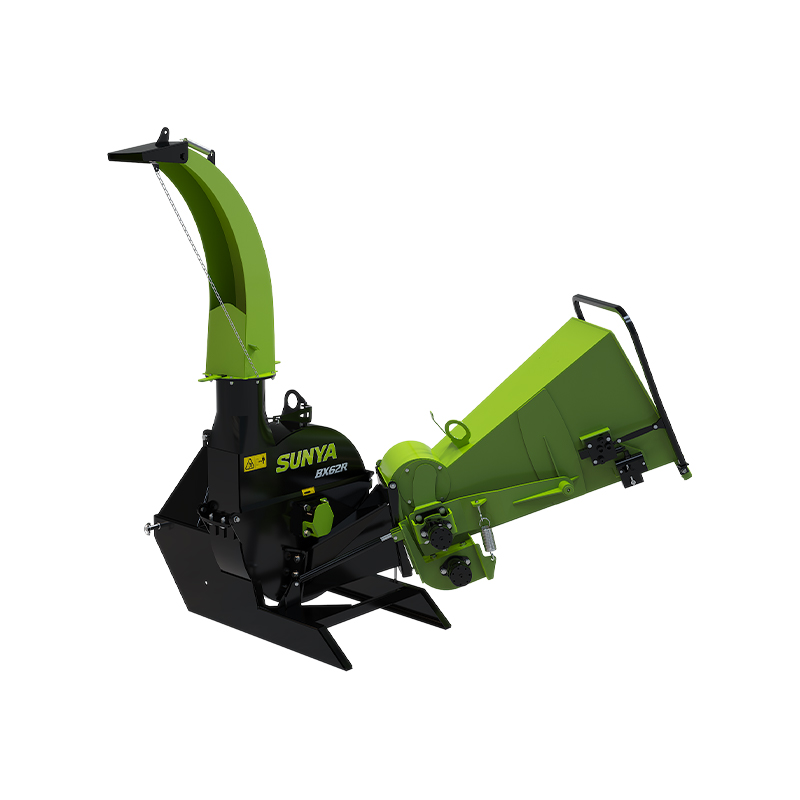 SUNYA BRAWN Tractor-Mounted Wood Chipper SeriesPurpose-built PTO chipper for branches and pruning waste, with self-feeding or hydraulic-feed models and 360° discharge; match PTO, hitch, and oil flow to the tractor.View Product →
Matching the Chipper to the Tractor
The chipper has to match four things on the tractor: PTO power at the shaft, shaft spline and speed, three point linkage capacity, and on hydraulic feed models the oil flow and return line.
- Confirm PTO power, not engine power. A 60 kW engine does not deliver 60 kW at the shaft, and soft ground takes more of it away.
- Check the shaft: 540 rpm six spline is the common standard, 1000 rpm appears on larger implements, and the spline count must match the tractor stub.
- Weigh the unit against the linkage. A heavy chipper on a light tractor lifts the front axle and removes steering exactly when the load is worst.
- Match the hydraulics. Feed rollers need flow and a free return line; a closed centre tractor and an open centre valve will not work together without a change.
- Plan the discharge. Chute direction, wind and trailer placement decide whether one operator can work alone or needs a second person raking.
Power figures are usually quoted at the engine, and a tractor loses a meaningful share of that between flywheel and PTO. Size the chipper against shaft output and leave headroom for wet material. If the numbers are close, ask the manufacturer to confirm the shaft rating in writing before the order is placed.
Maintenance and Safety Routine
Chip quality, throughput and operator safety all trace back to three habits: sharp blades, a correct anvil gap and disciplined feeding.
- Rotate or reverse blades at the first sign of torn chips; a clean cut uses less fuel than a blunt one.
- Reset the anvil gap after every blade change, then check it again after the first hour of work.
- Grease the bearings at the end of each shift, while the housing is still warm and the old grease still moves.
- Inspect hydraulic hoses and fittings weekly; a pinhole leak at pressure is a burn risk, not a drip.
- Feed short mixed bundles rather than long single stems, and never stand in line with the infeed.
- Keep the discharge chute clear and the deflector set; a blocked chute turns chips into a projectile stream.
Blade steel is a consumable, not a lifetime part. Two or three sharpening cycles per season is normal for contract work, and a spare set on the shelf removes the temptation to run a dull head through a full day.
Buying Checklist and Cost of Ownership
The purchase price is the smallest part of chipper ownership; blade steel, feed reliability and local service access decide the five year cost.
| Verify | What good looks like | Risk if skipped |
| Head and blade access | Blades reachable with one cover off, gap adjustable without shims | A two hour blade change becomes a two week excuse |
| Feed system | Rollers or gravity feed matched to the material you actually have | The machine blocks on the first forked limb |
| Discharge | Deflector, height and rotation suit trailer or windrow work | Constant raking and a second operator on site |
| Frame and welds | Gusseted joints and thick plate at the anvil and bearing mounts | Cracks appear after the first season of contract work |
| Spares and service | Blades, belts and bearings held as stock items | A stopped machine waits on a shipment |
| Tractor matching | PTO rating, spline and linkage confirmed against your fleet | Power matching gets sorted in the field, at your cost |
Total cost of ownership is dominated by three numbers: blade cost per hour, hours lost to blocked feed, and days lost waiting for a part. A cheaper machine wins on the invoice and loses on all three.
For buyers running several tractors, the sensible move is to standardise on one chipper family so blades, belts and working procedures stay the same across the fleet. Our product FAQ covers the matching questions that come up before an order is confirmed.
Frequently Asked Questions
What size wood chipper do I need?
Match the chipper to the largest straight limb you handle regularly, then check the shape of the feed opening, because forks block a machine long before diameter does. A machine with 20 to 30 percent headroom over your average task handles the difficult days without stalling.
Can a wood chipper handle green or wet branches?
Yes, at reduced throughput. Wet wood is heavier, stringier and more likely to clog the discharge, so feed more slowly and keep the blades sharp; a dull edge smears wet fibre instead of cutting it.
How often should chipper blades be sharpened?
For contract or orchard work, expect to sharpen or rotate blades every 20 to 40 working hours. Torn chips, a heavier fuel smell and slower feed are the practical signals that the edge is gone.
Is a PTO chipper hard on the tractor?
It loads the PTO and the cooling system, which matters on a hot day with a partly blocked radiator. Clean the radiator screen, keep the shaft shield in place and avoid running the tractor at low rpm under heavy feed.
One last check before ordering: confirm the shaft rating and linkage category against your tractor in writing, and buy a spare blade set with the machine. The first blade change always arrives sooner than expected.

We Are Ready to Support Your Agricultural Machinery Needs
Share your requirements and we will contact you shortly with a tailored solution and professional quotation.
Copyright © SUNYA Machinery Ltd. All rights reserved.
 Agricultural Tillage Equipment Manufacturers in China